9 objetos estranhos estão seguindo o 3I/ATLAS

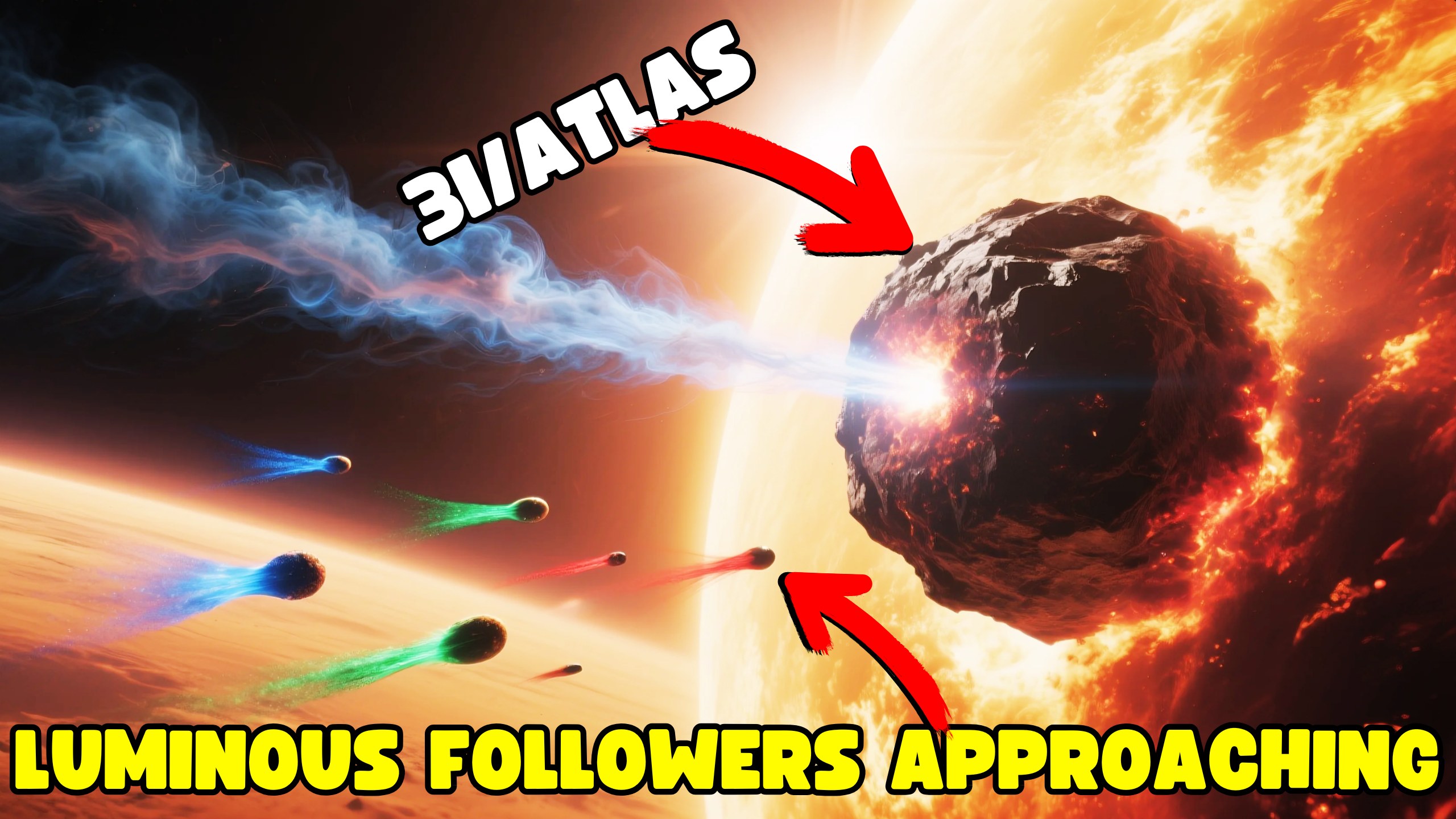
Prezados exploradores do cosmos, o Cometa 3I Atlas não para de gerar manchetes, mas, recentemente, uma história em particular tem circulado de forma viral, deixando a comunidade astronômica e o público geral em polvorosa.

Trata-se da alegação de que nada menos que nove objetos celestes distintos estariam seguindo o 3I Atlas através do espaço, mantendo exatamente a mesma trajetória. Essa narrativa, amplamente compartilhada em mídias sociais e fóruns de conspiração, descreve esses nove “seguidores” não como cometas comuns, mas como corpos celestes dotados de uma capacidade de brilho simplesmente descomunal. Segundo algumas dessas publicações sensacionalistas, a luz emitida por cada um desses objetos seria intensa o suficiente para “iluminar uma nação inteira”, ou até mesmo um estado. Nossa missão hoje é ir além e verificar a origem e a veracidade desta informação e, o mais importante, trazer uma atualização séria sobre o paradeiro e o status científico do 3I Atlas. A verdade sobre esses nove objetos brilhantes é tão extraordinária quanto a lenda sugere, ou estamos diante de mais uma histeria digital? Fiquem ligados para entender os fatos, as novas observações e como ele se comporta enquanto está temporariamente obscurecido pelo nosso Sol.
A postagem original que impulsionou essa história é um poço de alegações espetaculares, que parecem mais roteiro de ficção científica do que um artigo científico. O texto afirma que estes nove “cometas ocultos” ou objetos surgiram subitamente atrás do 3I Atlas, sincronizados em uma trajetória de perseguição quase perfeita. Os divulgadores do boato dão detalhes sobre o surgimento desses corpos: eles teriam sido detectados em menos de milissegundos, uma velocidade tão rápida que, teoricamente, nenhuma câmera conseguiria capturá-los em tempo real. Além da velocidade e da trajetória impecável, a ênfase é colocada na extraordinária fonte de energia desses corpos, que os capacitaria a irradiar luminosidade capaz de “iluminar nações inteiras” — muito além da emissão de qualquer cometa celestial conhecido. Tais descrições não apenas fogem ao escopo da dinâmica orbital e da astrofísica tradicional, mas parecem cuidadosamente construídas para induzir o leitor a questionar sua origem natural. O tom das postagens sugere que essa “descoberta sem precedentes” exige que “questionemos a origem, propósito e implicação para o cosmos”, insinuando fortemente a presença de algo artificial ou tecnologicamente inteligente seguindo nosso cometa interestelar.
Antes de confrontar o boato, precisamos firmar os pés na realidade factual do 3I Atlas. Contrariando algumas fontes conspiratórias, o 3I Atlas foi descoberto oficialmente em 1º de julho de 2025 pelo sistema de telescópios ATLAS (Asteroid Terrestrial-impact Last Alert System), operado principalmente a partir de sua sede no Havaí e também com instalações no Chile, e financiado pela NASA. Embora haja registros de ‘precovery’ – detecções anteriores em arquivos de maio, por exemplo, por sondas como a TESS, que não foram reconhecidas na época – sua confirmação formal de detecção ocorreu em julho. O que realmente torna o 3I Atlas fascinante é sua origem. Ele possui uma órbita hiperbólica bem definida, o que é a prova incontestável de que ele não está ligado gravitacionalmente ao nosso Sistema Solar. Ele não orbita o Sol, mas está apenas de passagem, confirmando seu status como um objeto genuinamente interestelar, sendo o terceiro já confirmado, após Oumuamua e 2I/Borisov. É justamente essa singularidade de trajetória que o torna um alvo tão visado tanto pela ciência séria quanto pelos rumores.
A busca pela fonte científica desta notícia dos nove objetos brilhantes foi minuciosa, percorrendo repositórios de dados de agências espaciais, comunicados oficiais de observatórios e publicações revisadas por pares. O resultado é categórico: não há absolutamente nenhuma fonte científica ou astronômica confiável que relate a existência de nove corpos distintos seguindo o 3I Atlas com a mesma precisão e velocidade descritas. Não há nenhum artigo, nenhum comunicado da NASA, da ESA ou de qualquer observatório renomado validando as alegações de cometas ocultos, emissões de energia capazes de iluminar nações ou aparecimento em milissegundos. Do ponto de vista da dinâmica orbital, para que nove corpos distintos estivessem atrás de um cometa interestelar, viajando numa mesma trajetória quase perfeita e em velocidades idênticas, isso exigiria uma coordenação física praticamente impossível sob o atual entendimento das leis gravitacionais e mecânica celeste. Essa “precisão extraordinária” seria, de fato, a maior evidência de que a informação não procede de uma fonte natural ou científica.
Essas postagens conspiratórias frequentemente servem a um propósito muito específico: preencher a lacuna da curiosidade com espetáculo, especialmente quando as evidências científicas apontam para um objeto natural, como é cada vez mais provável que seja o 3I Atlas. À medida que o cometa se comporta de maneira previsível e natural, seguindo sua trajetória de cometa, os entusiastas da conspiração ficam sem o elemento de novidade para atrair audiência. É aí que informações falsas, frequentemente disseminadas por perfis como o que encontramos (como o auto-intitulado “Ufumania”), se tornam a “fonte” para canais e páginas em busca de views rápidos. No entanto, é crucial que os consumidores de conteúdo cobrem a fonte. A disseminação irresponsável dessas alegações pode gerar pânico, ansiedade e medo no público. Eu, inclusive, recebo inúmeros e-mails de pessoas genuinamente apavoradas com o 3I Atlas, um reflexo direto do poder de amplificação dessas narrativas não verificadas. Nossa responsabilidade é garantir que, passada a fase de maior visibilidade, esses divulgadores de boatos sejam cobrados publicamente pelas suas alegações.
Voltando ao que é verificável e sério, o 3I Atlas está, neste momento, entrando em um período de invisibilidade. Conforme avança em sua órbita, ele está posicionado atrás do Sol em relação à Terra, sendo ofuscado pelo brilho intenso da nossa estrela. Isso impossibilita as observações diretas daqui da superfície terrestre. Esse período é crucial, pois, embora a ausência de novas imagens possa gerar especulações (inclusive servindo de motor para histórias como a dos nove objetos), é uma fase orbital perfeitamente esperada para a trajetória do cometa. O lado positivo é que essa ocultação é temporária. O 3I Atlas continuará seu trajeto e eventualmente reemergirá para ser novamente visível, permitindo-nos retomar a coleta de dados valiosos. Astrônomos e agências espaciais ao redor do mundo estão em modo de espera, ansiosos pelo momento em que o cometa sair da obscuridade solar para retomar as observações mais detalhadas possíveis.
Ainda que não possamos observá-lo daqui da Terra neste exato momento, o 3I Atlas está sendo monitorado de perto por sondas no espaço. Um dos eventos mais importantes e aguardados na pesquisa do 3I Atlas já aconteceu ou está para acontecer: a observação feita pelas sondas da Agência Espacial Europeia (ESA). Sondas orbitando Marte, como a Mars Express e a Exomars, estavam programadas para observar o cometa em uma aproximação incrivelmente vantajosa, a uma distância de cerca de 30 milhões de quilômetros. Comparado aos 570 milhões de quilômetros de distância em que o Telescópio Espacial Hubble o fotografou, essa é uma oportunidade única para coletar dados em alta resolução e muito mais detalhados sobre sua coma e núcleo. Essas observações focadas, agendadas por volta do início de outubro, prometem fornecer as informações mais íntimas que teremos do 3I Atlas até agora. Assim que esses dados e imagens (seja no espectro visível ou não) forem liberados pelas agências, faremos a cobertura completa aqui no canal.
A propósito de imagens, é importante abordar a diferença entre os registros já divulgados, para desmistificar o que se busca cientificamente. A melhor imagem estética do 3I Atlas que vimos até agora veio do Hubble – uma imagem nítida, de luz visível. No entanto, o James Webb, embora visualmente menos impactante (pois publicou “dados brutos”), capturou informações ainda mais valiosas. Muitos questionaram por que a imagem do James Webb parecia “pior” ou menos definida que a do Hubble. A resposta reside no propósito: o James Webb estava focado na espectroscopia, não na beleza visual. Ele coletou dados brutos no espectro infravermelho para analisar a composição química do cometa. O objetivo não era ver como o 3I Atlas é “bonito”, mas sim entender a matéria da qual ele é feito — essencial para determinar a origem da matéria orgânica em sistemas estelares distantes. Portanto, comparar a imagem de luz visível do Hubble com os dados brutos de composição do James Webb é como comparar a capa de um livro com a complexidade de seu conteúdo.

Para resumir, a história dos nove objetos brilhantes que estariam perseguindo o 3I Atlas não tem qualquer sustentação científica, parecendo ser mais um exercício de sensacionalismo irresponsável por páginas de pseudociência e ufologia. É fundamental exercer o pensamento crítico: desconfie de alegações extraordinárias que não apresentem fontes verificáveis e cientificamente críveis. Para continuar acompanhando o 3I Atlas com seriedade – desde o momento em que os novos dados da ESA e da NASA forem liberados até sua reemergência no céu – inscreva-se no canal e ative as notificações. Deixe seu like e comentário, pois eles são a nossa força para espalhar a ciência e combater a desinformação. Até o próximo vídeo, e fiquem de olho no céu (e nas fontes!).
Dear explorers of the cosmos, Comet 3I Atlas never stops generating headlines, but recently, one story in particular has been going viral, sending the astronomical community and the general public into a frenzy. It’s the claim that no fewer than nine distinct celestial objects are following 3I Atlas through space, maintaining exactly the same trajectory. This narrative, widely shared on social media and conspiracy forums, describes these nine “followers” not as ordinary comets, but as celestial bodies endowed with a simply extraordinary brightness. According to some of these sensationalist publications, the light emitted by each of these objects would be intense enough to “illuminate an entire nation,” or even a state. Our mission today is to go further and verify the origin and veracity of this information and, most importantly, to provide a serious update on the whereabouts and scientific status of 3I Atlas. Is the truth about these nine bright objects as extraordinary as the legend suggests, or are we facing yet another digital hysteria? Stay tuned to understand the facts, the new observations, and how it behaves while temporarily obscured by our Sun.
The original post that fueled this story is a wealth of spectacular claims, which read more like a science fiction script than a scientific paper. The text claims that these nine “hidden comets,” or objects, suddenly appeared behind the 3I Atlas, synchronized in a near-perfect pursuit trajectory. The rumormongers provide details about the appearance of these bodies: they were reportedly detected in less than milliseconds, a speed so fast that, theoretically, no camera could capture them in real time. Beyond their speed and impeccable trajectory, emphasis is placed on the extraordinary energy source of these bodies, which would enable them to radiate a luminosity capable of “illuminating entire nations”—far beyond the emission of any known celestial comet. Such descriptions not only fall outside the scope of orbital dynamics and traditional astrophysics, but also seem carefully constructed to lead the reader to question their natural origin. The tone of the posts suggests that this “unprecedented discovery” demands that we “question its origin, purpose, and implications for the cosmos,” strongly hinting at the presence of something artificial or technologically intelligent following our interstellar comet.
Before confronting the rumor, we need to firmly ground ourselves in the factual reality of Atlas 3I. Contrary to some conspiracy theories, Atlas 3I was officially discovered on July 1, 2025, by the ATLAS (Asteroid Terrestrial-impact Last Alert System) telescope system, operated primarily from its headquarters in Hawaii and also with facilities in Chile, and funded by NASA. Although there are records of ‘pre-recovery’—previous detections in archives from May, for example, by probes like TESS, which were not acknowledged at the time—its formal confirmation of detection occurred in July. What truly makes Atlas 3I fascinating is its origin. It has a well-defined hyperbolic orbit, which is irrefutable proof that it is not gravitationally bound to our Solar System. It does not orbit the Sun, but is merely passing through, confirming its status as a genuinely interstellar object, the third confirmed, after ‘Oumuamua and 2I/Borisov. It is precisely this unique trajectory that makes it such a hot target for both serious science and rumors.
The search for the scientific source for this news of the nine bright objects was meticulous, combing through space agency data repositories, official observatory communications, and peer-reviewed publications. The result is categorical: there is absolutely no reliable scientific or astronomical source reporting the existence of nine distinct bodies following Atlas 3I with the same precision and speed described. There is no article, no statement from NASA, ESA, or any other renowned observatory validating the claims of hidden comets, energy emissions capable of illuminating nations, or appearances in milliseconds. From the perspective of orbital dynamics, for nine distinct bodies to be behind an interstellar comet, traveling on the same near-perfect trajectory and at identical speeds, would require a physical coordination virtually impossible under the current understanding of gravitational laws and celestial mechanics. This “extraordinary precision” would, in fact, be the strongest evidence that the information does not come from a natural or scientific source.
These conspiracy posts often serve a very specific purpose: to fill the curiosity gap with spectacle, especially when scientific evidence points to a natural object, as the 3I Atlas is increasingly likely to be. As the comet behaves predictably and naturally, following its cometary trajectory, conspiracy enthusiasts are left without the element of novelty to attract an audience. This is where false information, often spread by profiles like the one we found (such as the self-titled “Ufumania”), becomes the “source” for channels and pages seeking quick views. However, it is crucial that content consumers hold the source accountable. The irresponsible dissemination of these claims can generate panic, anxiety, and fear in the public. I, myself, receive countless emails from people genuinely terrified by the 3I Atlas, a direct reflection of the amplification power of these unverified narratives. Our responsibility is to ensure that, once the high profile phase has passed, these rumormongers are publicly held accountable for their claims.
Returning to what is verifiable and serious, the 3I Atlas is currently entering a period of invisibility. As it advances in its orbit, it is positioned behind the Sun relative to Earth, being obscured by our star’s intense brightness. This makes direct observations impossible from Earth’s surface. This period is crucial because, although the lack of new images may generate speculation (and even serve as a catalyst for stories like the one about the nine objects), it is a perfectly expected orbital phase for the comet’s trajectory. The positive side is that this occultation is temporary. The 3I Atlas will continue its trajectory and eventually re-emerge into view again, allowing us to resume collecting valuable data. Astronomers and space agencies around the world are on standby, eagerly awaiting the moment the comet emerges from solar obscurity to resume the most detailed observations possible.
Although we cannot observe it from Earth at this precise moment, the 3I Atlas is being closely monitored by probes in space. One of the most important and anticipated events in the 3I Atlas research has already happened or is about to happen: the observation made by the European Space Agency (ESA) probes. Probes orbiting Mars, such as Mars Express and Exomars, were scheduled to observe the comet at an incredibly advantageous approach, at a distance of about 30 million kilometers. Compared to the 570 million kilometers at which the Hubble Space Telescope imaged it, this is a unique opportunity to collect high-resolution and much more detailed data on its coma and nucleus. These focused observations, scheduled around early October, promise to provide the most intimate information we’ll have of the 3I Atlas yet. As soon as these data and images (in the visible spectrum or otherwise) are released by the agencies, we’ll provide full coverage here on the channel.
Regarding the images, it’s important to address the differences between the previously released images to demystify what is being scientifically sought. The best aesthetic image of the 3I Atlas we’ve seen so far came from Hubble—a sharp, visible-light image. However, James Webb, while visually less striking (because it published “raw data”), captured even more valuable information. Many have questioned why James Webb’s image appeared “worse” or less defined than Hubble’s. The answer lies in its purpose: James Webb focused on spectroscopy, not visual beauty. He collected raw data in the infrared spectrum to analyze the comet’s chemical composition. The goal wasn’t to see how “beautiful” the 3I Atlas is, but rather to understand the matter of which it is made—essential for determining the origin of organic matter in distant star systems. Therefore, comparing Hubble’s visible-light image with James Webb’s raw composition data is like comparing the cover of a book with the complexity of its contents.
In short, the story of the nine bright objects allegedly chasing the 3I Atlas has no scientific basis, appearing to be yet another exercise in irresponsible sensationalism by pseudoscience and ufology websites. Critical thinking is essential: be wary of extraordinary claims that lack verifiable and scientifically credible sources. To continue following the 3I Atlas seriously—from the moment the new ESA and NASA data are released until its reemergence in the sky—subscribe to the channel and turn on notifications. Leave your like and comment, as they are our strength in spreading science and combating misinformation. Until the next video, and keep an eye on the sky (and the sources!).
Artigos Relacionados


Sobre o Autor

Sou Fabio Russo, desenvolvedor e administrador do site Artesanato Total desde 2015. A mais de 25 anos trabalho com diversos nichos de sites na Internet, sempre presando a qualidade em todos os projetos.
0 Comentários