Crentes Estão praticando na Santa Missa esses 10 Erros que VOCÊ (talvez) NÃO SABIA!

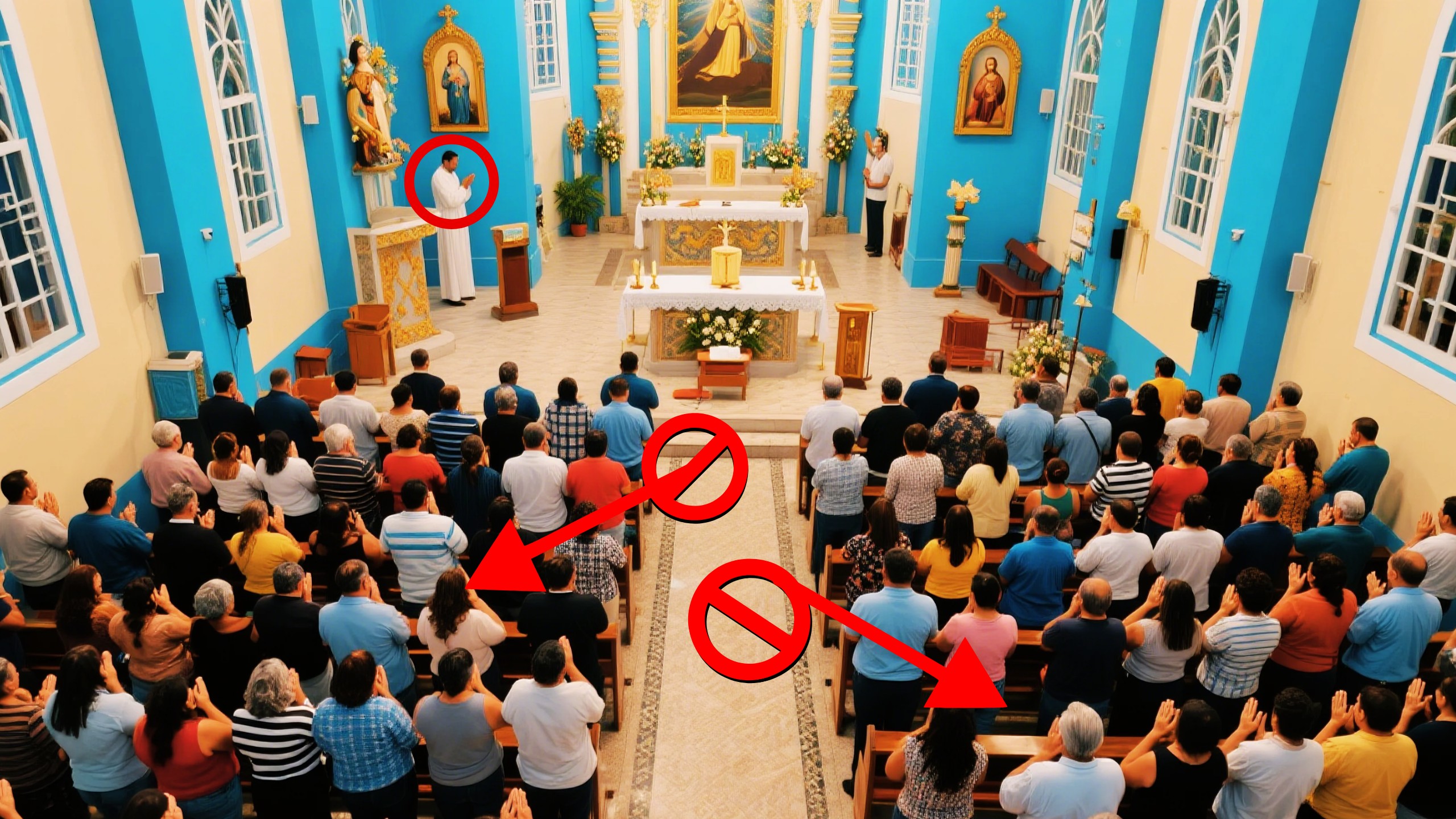
Olha só que interessante: você já parou para pensar que a Santa Missa, esse encontro sagrado com o Divino que participamos semana após semana, pode esconder segredos sobre como, de fato, a vivenciamos?

E se eu te dissesse que muitos de nós, mesmo com o melhor das intenções e com o coração repleto de fé, talvez estejamos cometendo “erros” que nunca imaginamos, e que eles podem estar diminuindo a imensidão da graça que nos é oferecida ali? Essa não é uma história que você já ouviu, mas uma revelação que pode transformar profundamente sua experiência de fé, fazendo você redescobrir o valor de cada momento da liturgia. Prepare-se para ver a Missa sob uma luz completamente nova. Antes de mergulharmos nessa descoberta que pode transformar sua fé, quero pedir que, neste exato momento, escreva nos comentários os nomes de pessoas e parentes que precisam de oração; vamos incluir todos esses nomes em nossa oração principal com o Rosário, confiando que a união da nossa fé multiplica as bênçãos.
Imagine a vida de uma mulher chamada Clara, como a de tantos de nós, cheia de correrias e compromissos que apertam a rotina. Nos domingos, a Santa Missa era, para ela, um compromisso importante, mas frequentemente vivido entre o susto do despertador e a pressa de sair de casa. Era comum Clara, depois de uma noite de sono apertada, quase “cair da cama”, vestir a primeira roupa que encontrasse à mão e sair às pressas, chegando à igreja já com o canto inicial ou o Ato Penitencial em andamento. Ela nem parava para um momento de silêncio, de introspecção, ou uma oração pessoal pedindo a Deus que seu coração estivesse aberto; o preparo era zero, uma agitação que a impedia de, realmente, aquietar-se para o encontro que se anunciava. Quem de nós, ao se encontrar com a pessoa mais amada, aquela que esperamos ansiosamente rever, chegaria atrasado e despreparado, sem um segundo para organizar os pensamentos e o coração? A Missa é exatamente esse encontro com o Rei dos Reis, com o noivo que anseia pela nossa presença, e a verdade é que ao nos atrasarmos, perdemos as orações iniciais que nos preparam, a bênção que nos acolhe e uma parte fundamental desse diálogo profundo, como se recusássemos um convite especial para o banquete da alma, começando a refeição pelo meio.
Já dentro do templo, onde o sagrado se encontra com o terreno, a forma como Clara se apresentava também revelava essa desatenção à profundidade do momento. Para ela, ir à igreja era como ir a qualquer outro lugar casual, o que se manifestava em suas vestimentas: muitas vezes, bermudas, camisetas sem manga ou decotes muito ousados no caso das mulheres, como se estivessem indo a uma praia ou a um evento descontraído. Ela nunca pensava que aquele não era um lugar comum, mas a casa de Deus, um lugar onde deveríamos nos apresentar com dignidade, como quem vai a um casamento importante, um grande evento de gala, ou, melhor ainda, como quem vai ao encontro de um rei. Afinal, os sacerdotes se preparam, vestindo os paramentos com reverência, e o que dizer de nós? E não era só a vestimenta: o telefone celular, tão presente em sua vida diária, frequentemente virava uma fonte de distração, com toques interrompendo a homilia ou rápidas checadas nas mensagens. A Santa Missa não é um espaço para entretenimento ou para resolver pendências; é o momento onde Deus se revela a nós, e Ele não nos manda um SMS ou uma mensagem no WhatsApp. A Palavra, a pregação do sacerdote e o mistério que se celebra já são a forma como Ele está falando conosco, e precisamos estar inteiros para ouvi-Lo.
À medida que a celebração avançava, Clara, com seu coração bem-intencionado, mas talvez ainda não plenamente iluminado, caía em mais alguns equívocos comuns que passavam despercebidos por muitos. Um deles era a atitude de bater palmas em momentos que, embora emocionantes, não condizem com a sacralidade do sacrifício eucarístico. Para Clara, era uma expressão natural de alegria ou aprovação a um canto bonito, mas ela nunca parou para pensar que a Santa Missa é a atualização do Calvário, o sacrifício redentor de Jesus na Cruz. E quem aplaudiu a crucificação do Senhor? Somente Seus inimigos. O templo é a casa de Deus, não um palco, e como São João XXIII nos ensinou ao ser aplaudido, “Templi, templum Dei” – “o templo é de Deus”, não um lugar para aplausos. É um momento de adoração, de gratidão silenciosa, de devoção profunda pelo que Jesus fez por nós. Além disso, Clara tinha o hábito, assim como muitos outros fiéis, de recitar junto com o sacerdote certas orações que são exclusivas dele, como a Oração da Paz antes da comunhão ou a Doxologia (“Por Cristo, com Cristo, em Cristo…”). Ela não sabia, mas na liturgia, cada um tem seu papel bem definido: o do sacerdote é celebrar o mistério, o da assembleia é participar ativamente, respondendo e unindo-se em oração. Confundir os papéis pode, inadvertidamente, tirar a força da exclusividade do rito sagrado.
Ofertório, um dos momentos mais ricos e, por vezes, mais incompreendidos da Missa, era para Clara, infelizmente, uma “pausa” oportuna entre a pregação e a consagração. Enquanto o sacerdote preparava o pão e o vinho, as conversas entre os bancos se acendiam, as distrações aumentavam, e o ato de simplesmente levantar para fazer a coleta material tornava-se o foco. Clara não sabia, e muitos também não sabem, que o Ofertório é muito mais que uma coleta de dinheiro; é o momento em que somos convidados a colocar, junto com o pão e o vinho que serão transformados, a nossa própria vida, as nossas dores, os nossos desejos mais profundos, os nossos projetos e até mesmo os nossos pecados que queremos ver transformados. A tradição da Igreja nos diz que é neste instante que nosso Anjo da Guarda eleva nossas intenções, nossos pedidos e nossa oração diretamente ao Céu, apresentando-os a Deus. É um momento de união profunda com o sacrifício que se iniciará, onde nossa vida, como o trigo que é moído para virar pão, é oferecida para ser moldada e santificada pelo Senhor.
Então chegava o ápice, o coração da Missa: a Comunhão. Para Clara, este era o momento mais esperado, mas, novamente, a pressa e a falta de entendimento sobre a grandiosidade daquele ato a impediam de vivê-lo plenamente. Ela se dirigia à fila da Comunhão, talvez ainda com a mente cheia de pensamentos externos, sem a plena consciência de que estava prestes a receber o próprio Corpo e Sangue de Jesus Cristo, o Deus encarnado. Não se tratava apenas de um gesto religioso, mas de uma união íntima e transformadora que exigia um coração alegre, sim, mas também profundamente reverente e, acima de tudo, em estado de graça para que não se tornasse causa de julgamento, mas de bênção. Ela não compreendia que a atitude ao se apresentar diante do Corpo de Cristo deveria ser de uma fé vibrante, expressa num “Amém” dito com toda a alma, um sim convicto à presença do Senhor. E para aqueles que, por algum motivo, não podiam comungar, Clara não percebia a oportunidade única de fazer uma comunhão espiritual profunda, de dobrar os joelhos em seu lugar e ali, no silêncio da alma, rogar por graças inimagináveis que só a intimidade com Deus pode derramar.
Ao retornar ao seu lugar, após receber a Eucaristia – fosse na boca ou na palma da mão, conforme a permissão da Igreja –, o desafio continuava: como se portar após a união com o Cristo? Para Clara, e para muitos, este momento muitas vezes era resumido a uma oração rápida, quase protocolar, antes que a atenção fosse novamente desviada para o celular, para um cochicho com a pessoa ao lado ou, o que era ainda mais comum e revelador de um “erro” significativo, a pressa para sair da igreja. Ela nem esperava a bênção final. Era como se a Missa terminasse para ela no instante em que recebia a hóstia. Este é, sem dúvida, um dos erros mais lamentáveis, pois a celebração da Eucaristia, como um verdadeiro encontro de amor, tem seu início com o sinal da cruz e se conclui com a bênção solene do sacerdote e a munus (“Ide em paz, e que o Senhor vos acompanhe!”), que nos comissiona e nos envia com Jesus para nossa semana. Aqueles que saem às pressas, sem aguardar esse final, quase que “roubam” de si mesmos a plenitude da graça e a certeza de que Jesus, que se fez um conosco, quer realmente ir para casa conosco, acompanhar cada passo de nossos dias e ser nosso sustento até o próximo domingo, quando nos acolherá novamente.
Foi em um dia como tantos outros, que Clara, quase por acaso, presenciou a devoção de uma senhora idosa, com olhos mareados de fé e um semblante sereno. Essa senhora chegava sempre cedo, rezava em silêncio antes da Missa, sentava-se com a dignidade de quem se prepara para um evento régio, sem o celular à vista, e em todos os momentos, demonstrava uma reverência impressionante: nunca aplaudia, seu “Amém” era forte, mas respeitoso, e ela se demorava em profunda ação de graças após a Comunhão, sempre permanecendo até a bênção final e um pouco mais, como quem não quer se despedir de um grande amor. Clara sentiu algo estranho, uma quietude que contrastava com sua própria agitação. A partir daquele dia, movida por uma curiosidade inata e uma nova sede, ela começou a se atentar. Aos poucos, as lições que sempre escutava sobre o valor da Santa Missa começaram a fazer sentido. Ela passou a acordar mais cedo, a se preparar em casa não só fisicamente, mas espiritualmente, com uma breve oração. Suas roupas mudaram, expressando respeito; seu celular passou a ficar no silencioso e guardado; o Ofertório se tornou um momento de entrega profunda da sua própria vida; a Comunhão, um banquete de amor; e o pós-comunhão, uma ação de graças genuína, de joelhos, sentindo a presença de Jesus em si. Sua vida parecia se desenrolar com uma nova paz, uma serenidade que antes lhe era desconhecida, fruto dessa redescoberta do maior dos dons de Deus.

A jornada de Clara, ainda que imaginária, é um espelho para muitos de nós, não é mesmo? Quantas vezes não transferimos essa pressa e essa superficialidade com que às vezes encaramos a Missa para outros aspectos da nossa vida de fé? A oração diária que mal fazemos, as pregações que ouvimos sem nos aprofundar, a dificuldade de perdoar de coração, a busca pela paz em meio ao caos e até mesmo o desejo por mais conversões e um aumento genuíno da fé parecem distantes quando não nos dedicamos a esse encontro semanal com o Mestre. Assim como Clara aprendeu a vivenciar a Missa com plenitude, somos chamados a cultivar essa postura em nossa relação diária com Deus, buscando a preparação, a reverência e a gratidão em tudo que fazemos. Pense agora em quem ao seu lado, na família ou entre amigos, está precisando dessa conversão de coração, de mais fé, de mais paz. Comente agora os nomes dessas pessoas. Iremos rezar por cada um deles, incluindo-os na poderosa oração do Rosário, pois sabemos que a fé em comunidade move montanhas.
Agora, me diga nos comentários: qual desses “erros” sobre a Santa Missa você identificou na sua própria jornada de fé, ou qual deles te surpreendeu mais e te fez refletir profundamente sobre sua participação? A Santa Missa não é uma lista de regras a cumprir, mas um convite a uma união profunda com o Divino, um pedaço do Céu na Terra, uma fonte inesgotável de graça que nos espera a cada semana. Se essa mensagem tocou seu coração e te ajudou a enxergar a Santa Missa com novos olhos, não guarde para si! Deixe o seu “curtir” neste vídeo, compartilhe com seus amigos e familiares que também podem se beneficiar dessa reflexão, e o mais importante: inscreva-se no canal para não perder os próximos conteúdos que preparamos com tanto carinho para a sua jornada de fé. Que a graça da Missa te acompanhe e te transforme sempre!
Look how interesting: have you ever stopped to think that Holy Mass, this sacred encounter with the Divine that we participate in week after week, might hide secrets about how we truly experience it? What if I told you that many of us, even with the best of intentions and hearts full of faith, may be making “mistakes” we never imagined, and that they could be diminishing the immensity of the grace offered to us there? This isn’t a story you’ve heard before, but a revelation that can profoundly transform your experience of faith, making you rediscover the value of each moment of the liturgy. Prepare to see Mass in a completely new light. Before we dive into this discovery that can transform your faith, I want to ask you, right now, to write in the comments the names of people and relatives who need prayer; we will include all these names in our main prayer with the Rosary, trusting that the union of our faith multiplies the blessings.
Imagine the life of a woman named Clara, like so many of us, full of rushes and commitments that squeeze our routine. On Sundays, Holy Mass was an important commitment for her, but it was often lived between the shock of the alarm clock and the rush to leave the house. It was common for Clara, after a tight night’s sleep, to almost “fall out of bed,” throw on the first clothes she could find, and rush out, arriving at church with the opening hymn or the Penitential Act already underway. She didn’t even stop for a moment of silence, introspection, or a personal prayer asking God for an open heart; she was completely unprepared for the upcoming encounter. Who among us, when meeting the person we love most, the one we eagerly await, would arrive late and unprepared, without a second to organize our thoughts and heart? Mass is precisely this encounter with the King of Kings, with the bridegroom who longs for our presence. The truth is that by being late, we miss the opening prayers that prepare us, the blessing that welcomes us, and a fundamental part of this profound dialogue, as if we were refusing a special invitation to the banquet of the soul, beginning the meal halfway through.
Once inside the temple, where the sacred meets the earthly, Clara’s presentation also revealed this lack of attention to the depth of the moment. For her, going to church was like going anywhere else casual, which was evident in her attire: often shorts, sleeveless tops, or very low-cut tops for women, as if they were going to the beach or a casual event. She never considered that this was not an ordinary place, but the house of God, a place where we should present ourselves with dignity, as if attending an important wedding, a grand gala event, or, better yet, as if meeting a king. After all, priests prepare themselves, donning their vestments with reverence, and what about us? And it wasn’t just the vestments: cell phones, so present in their daily lives, often became a source of distraction, with ringtones interrupting the homily or quick checks of messages. Holy Mass is not a space for entertainment or resolving pending matters; it is the moment where God reveals Himself to us, and He doesn’t send us a text message or a WhatsApp message. The Word, the priest’s preaching, and the mystery being celebrated are already the way He is speaking to us, and we need to be fully present to hear Him.
As the celebration progressed, Clara, with her well-intentioned but perhaps not yet fully enlightened heart, fell into a few more common mistakes that went unnoticed by many. One of them was the act of clapping at moments that, while moving, do not befit the sacredness of the Eucharistic sacrifice. For Clare, it was a natural expression of joy or approval of a beautiful song, but she never stopped to consider that the Holy Mass is the actualization of Calvary, Jesus’ redemptive sacrifice on the Cross. And who applauded the Lord’s crucifixion? Only His enemies. The temple is God’s house, not a stage, and as Saint John XXIII taught us when he was applauded, “Templi, templum Dei”—”the temple is God’s,” not a place for applause. It is a moment of adoration, of silent gratitude, of profound devotion for what Jesus did for us. Furthermore, Clare, like many other faithful, had the habit of reciting with the priest certain prayers that are exclusive to him, such as the Prayer of Peace before Communion or the Doxology (“Through Christ, with Christ, in Christ…”). She didn’t know it, but in the liturgy, each person has a well-defined role: the priest’s is to celebrate the mystery, the assembly’s is to actively participate, responding and uniting in prayer. Confusing the roles can inadvertently take away the strength of the sacred rite’s exclusivity.
The Offertory, one of the richest and sometimes most misunderstood moments of the Mass, was, unfortunately, for Clare, an opportune “pause” between the preaching and the consecration. As the priest prepared the bread and wine, conversations in the pews flared, distractions increased, and the act of simply getting up to make the material collection became the focus. Clare didn’t know, and many don’t know either, that the Offertory is much more than a collection of money; it is the moment when we are invited to place, along with the bread and wine that will be transformed, our own lives, our pains, our deepest desires, our projects, and even our sins that we wish to see transformed. Church tradition tells us that it is at this moment that our Guardian Angel raises our intentions, our requests, and our prayers directly to Heaven, presenting them to God. It is a moment of profound union with the sacrifice that is about to begin, where our lives, like wheat ground to become bread, are offered to be shaped and sanctified by the Lord.
Then came the culmination, the heart of the Mass: Communion. For Clare, this was the most anticipated moment, but, once again, her haste and lack of understanding of the enormity of that act prevented her from experiencing it fully. She made her way to the Communion line, perhaps still with her mind filled with external thoughts, without fully realizing that she was about to receive the very Body and Blood of Jesus Christ, God incarnate. It was not merely a religious gesture, but an intimate and transformative union that required a joyful heart, yes, but also a deeply reverent one, and, above all, a state of grace so that it would not become a cause for judgment, but rather a blessing. She didn’t understand that the attitude when presenting herself before the Body of Christ should be one of vibrant faith, expressed in a wholehearted “Amen,” a convinced yes to the Lord’s presence. And for those who, for some reason, could not receive Communion, Clara failed to recognize the unique opportunity for a profound spiritual communion, for kneeling in her place and there, in the silence of her soul, praying for unimaginable graces that only intimacy with God can bestow.
Upon returning to her seat after receiving the Eucharist—whether in the mouth or in the palm of the hand, as permitted by the Church—the challenge remained: how should one behave after union with Christ? For Clara, and for many others, this moment was often reduced to a quick, almost formal prayer, before attention was once again diverted to her cell phone, a whisper with the person next to her, or, even more common and revealing a significant “mistake,” the rush to leave the church. She didn’t even wait for the final blessing. It was as if the Mass ended for her the moment she received the host. This is undoubtedly one of the most regrettable mistakes, because the celebration of the Eucharist, as a true encounter of love, begins with the sign of the cross and concludes with the priest’s solemn blessing and the munus (“Go in peace, and may the Lord be with you!”), which commissions us and sends us with Jesus into our week. Those who leave in a hurry, without waiting for this end, almost “rob” from themselves the fullness of grace and the certainty that Jesus, who became one with us, truly wants to go home with us, accompanying every step of our days and being our sustenance until the next Sunday, when he will welcome us again.
It was on a day like so many others that Clara, almost by chance, witnessed the devotion of an elderly woman, her eyes filled with faith and a serene countenance. This woman always arrived early, prayed silently before Mass, sat with the dignity of someone preparing for a royal event, without her cell phone in sight, and at all times, demonstrated impressive reverence: she never applauded, her “Amen” was strong but respectful, and she lingered in profound thanksgiving after Communion, always remaining until the final blessing and a little longer, as if unwilling to say goodbye to a great love. Clara felt something strange, a stillness that contrasted with her own agitation. From that day on, driven by an innate curiosity and a new thirst, she began to pay attention. Little by little, the lessons she had always heard about the value of Holy Mass began to make sense. She began to wake up earlier, to prepare herself at home not only physically but also spiritually, with a brief prayer. Her clothes changed, expressing respect; her cell phone was silent and put away; the Offertory became a moment of profound surrender of her own life; Communion, a banquet of love; and post-Communion, a genuine thanksgiving, on her knees, feeling the presence of Jesus within her. Her life seemed to unfold with a new peace, a serenity previously unknown to her, the fruit of this rediscovery of God’s greatest gift.
Clare’s journey, though imaginary, is a mirror for many of us, isn’t it? How often do we transfer this haste and superficiality with which we sometimes approach Mass to other aspects of our faith life? The daily prayer we barely pray, the sermons we listen to without delving deeply, the difficulty of forgiving wholeheartedly, the search for peace amidst chaos, and even the desire for more conversions and a genuine increase in faith seem distant when we don’t dedicate ourselves to this weekly encounter with the Master. Just as Clare learned to experience the Mass fully, we are called to cultivate this attitude in our daily relationship with God, seeking preparation, reverence, and gratitude in everything we do. Now think about those around you, in your family or among friends, who need this conversion of heart, more faith, and more peace. Comment on their names now. We will pray for each of them, including them in the powerful prayer of the Rosary, for we know that faith in community moves mountains.
Now, tell me in the comments: which of these “mistakes” about the Holy Mass have you identified in your own faith journey, or which surprised you the most and made you reflect deeply on your participation? The Holy Mass is not a list of rules to follow, but an invitation to a profound union with the Divine, a piece of Heaven on Earth, an inexhaustible source of grace that awaits us each week. If this message touched your heart and helped you see the Holy Mass with new eyes, don’t keep it to yourself! Like this video, share it with your friends and family who might also benefit from this reflection, and most importantly, subscribe to the channel so you don’t miss the upcoming content we’ve lovingly prepared for your faith journey. May the grace of the Mass accompany you and transform you forever!
Artigos Relacionados


Sobre o Autor

Sou Fabio Russo, desenvolvedor e administrador do site Artesanato Total desde 2015. A mais de 25 anos trabalho com diversos nichos de sites na Internet, sempre presando a qualidade em todos os projetos.
0 Comentários