O Cometa 3I/ATLAS É A Fonte do Sinal Alienígena “Uau!”?

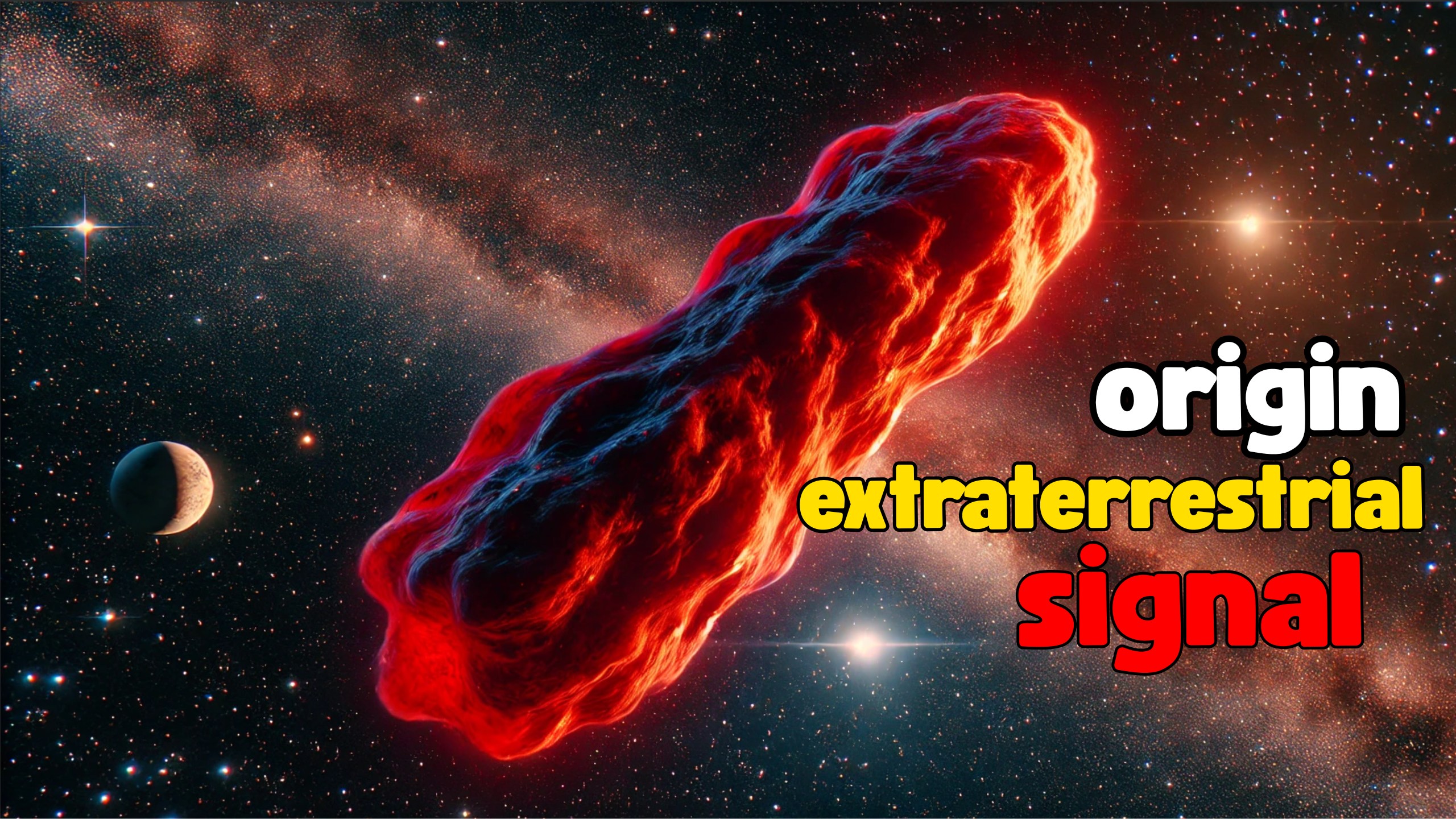
Em 1977, a humanidade recebeu um pulso de rádio tão singular, tão intenso, que recebeu o apelido de Sinal “Uau!”, e por quase cinco décadas, ele tem sido o principal candidato a uma transmissão de vida inteligente extraterrestre.

Mas e se o remetente dessa mensagem ultrassecreta não fosse uma civilização alienígena superavançada, mas sim um objeto gelado e misterioso que acabou de visitar nosso Sistema Solar? O astrofísico de Harvard, Avi Loeb, figura notoriamente polarizadora por suas propostas audaciosas, jogou uma nova hipótese na mesa: o recém-descoberto cometa interestelar 3I/ATLAS pode ter emitido aquele famoso sinal. Esta coincidência de posições no céu entre um evento único de 1977 e a trajetória de um viajante cósmico de 2025 está reacendendo o debate sobre vida fora da Terra e forçando os cientistas a reconsiderar tudo o que pensávamos saber sobre esse ruído cósmico histórico. O que realmente aconteceu naquele dia de agosto? E o que essa ligação inesperada com o cometa nos revela?
A gênese desse mistério remonta a 15 de agosto de 1977, quando o radiotelescópio Big Ear, operado pela Universidade Estadual de Ohio, varria os céus na constelação de Sagitário. Naquele dia, ele detectou uma anomalia: um sinal de rádio de banda estreita com uma intensidade absurdamente superior ao ruído de fundo normal. O mais intrigante era a sua duração e a frequência exata em que foi capturado, características que o diferenciavam de qualquer emissão natural conhecida. O sinal, tecnicamente registrado nos dados brutos como “6EQUJ5” – uma sequência que indica o aumento exponencial da intensidade ao longo do tempo de observação – preencheu precisamente os 72 segundos durante os quais o telescópio conseguia focar naquele ponto específico do espaço, antes que a rotação da Terra o desviasse. O astrônomo Jerry Ehman, ao revisar a impressão de computador semanas depois, ficou tão estupefato pela clareza e força da transmissão que circulou o código e escreveu a anotação manual que se tornaria icônica: “Wow!” (Uau!). O pulso nunca mais se repetiu, transformando-o imediatamente no principal — e até hoje insuperável — enigma de natureza potencialmente extraterrestre da astronomia.
Quase meio século se passou desde o evento no Big Ear, e o Sinal “Uau!” continua a ser um buraco negro na nossa compreensão astronômica. Ao longo dos anos, os cientistas tentaram desvendar sua origem com explicações que variam desde emissões naturais, como aquelas geradas por nuvens de hidrogênio (que, no entanto, não justificavam a extrema intensidade e a banda estreita), até ruídos produzidos por fenômenos terrestres ou até mesmo o trânsito de satélites ou lixo espacial. Nenhuma dessas hipóteses, contudo, conseguiu oferecer uma explicação completa e replicável para o fenômeno. É neste vácuo de certeza que o astrofísico Avi Loeb prospera. Conhecido por suas especulações de ponta e frequentemente controversas, Loeb tem a habilidade de ressuscitar debates antigos, forçando a comunidade científica a expandir os limites da imaginação. Ao colocar o cometa 3I/ATLAS no epicentro dessa história, ele não apenas reacende o mistério, mas sugere uma nova e bizarra fonte para o sinal de rádio mais famoso da história.
A essência da proposta de Loeb baseia-se em uma coincidência puramente geométrica, mas estatisticamente improvável. O cometa 3I/ATLAS, um objeto interestelar que apenas recentemente tivemos a chance de estudar, estava vagando pelo cosmos em 1977. Através de cálculos de trajetória reversa, Loeb determinou que, na exata época em que o Sinal “Uau!” foi detectado, o cometa encontrava-se em uma posição no céu notavelmente próxima daquela observada pelo telescópio Big Ear. A diferença de localização entre o ponto de onde o sinal foi detectado e a posição projetada do 3I/ATLAS era mínima: cerca de quatro graus em ascensão reta e oito em declinação. Segundo as análises de Loeb, essa proximidade não era apenas fortuita; a probabilidade de uma coincidência puramente aleatória dessa magnitude, envolvendo um objeto interestelar, era de menos de 1% – precisamente 0,6%. Essa correlação posicional rara fornece, no mínimo, um intrigante ponto de partida para a especulação, sugerindo que a fonte, qualquer que fosse ela, estava fisicamente naquela região do espaço naquele momento crucial.
Para que o cometa 3I/ATLAS fosse o emissor do “Uau!”, as implicações em termos de engenharia e energia seriam colossais. Loeb calculou que, dado o poder do sinal registrado na Terra em 1977, e considerando a vasta distância que o sinal precisaria percorrer, a fonte transmissora no cometa teria que emitir algo entre 0,5 e 2 gigawatts de potência. Essa é uma quantidade de energia comparável àquela produzida por um reator nuclear de porte médio em operação aqui na Terra. Além disso, o próprio sinal estava sutilmente deslocado para o azul, o que seria coerente com a velocidade de aproximação que o cometa teria em relação à Terra. Contudo, apesar do fascinante ajuste posicional e cinemático, não existe, até hoje, qualquer observação direta, seja retrospectiva ou atual, que confirme que o cometa está emitindo qualquer tipo de radiação ou transmissão artificial. É fundamental também situar a credibilidade do proponente: Loeb é um acadêmico de peso, mas também um defensor conhecido de hipóteses especulativas, como sua sugestão anterior de que o objeto interestelar ‘Oumuamua poderia ser um artefato alienígena tecnológico.
A esperança de desvendar a origem do “Uau!” não se limita às retrospectivas de Loeb. A comunidade SETI (Busca por Inteligência Extraterrestre) continua ativamente a perseguir uma repetição do evento. Em 2022, pesquisadores do Instituto SETI empreenderam uma das mais abrangentes buscas direcionadas já realizadas na região do céu de Sagitário. Eles focaram em uma estrela específica semelhante ao nosso Sol, situada a aproximadamente 1,8 mil anos-luz, considerada um candidato provável para hospedar vida. Utilizando os poderosíssimos Green Bank Telescope (GBT) e o Allen Telescope Array (ATA), a equipe dedicou longas horas de observação minuciosa. Em um esforço meticuloso para aumentar as chances de sucesso, as varreduras dos dois telescópios foram sobrepostas por cerca de dez minutos, um período que replicava as condições ideais para a detecção de pulsos breves. No entanto, o resultado final foi decepcionante: após todo o esforço e tempo dedicado, não houve detecção de nenhum sinal que se assemelhasse ao “Uau!”. Essas buscas infrutíferas reforçam a ideia perturbadora de que o sinal de 1977 foi, de fato, um evento singular, talvez uma anomalia nunca mais repetível.
Para entendermos melhor a hipótese de Loeb, precisamos conhecer o objeto em questão. O 3I/ATLAS foi descoberto apenas recentemente, em julho de 2025, e imediatamente gerou enorme entusiasmo, pois é apenas o terceiro objeto interestelar formalmente identificado, após o enigmático ʻOumuamua e o cometa Borisov. Suas características são impressionantes, destacando-se por possuir um núcleo estimado em pelo menos cinco quilômetros de diâmetro, o que o torna um objeto considerável. A massa calculada do 3I/ATLAS atinge dezenas de bilhões de toneladas, valores significativamente superiores aos medidos em muitos outros visitantes cósmicos que orbitam dentro do nosso Sistema Solar, embora isso não o classifique como o cometa mais massivo já registrado. Sua natureza interestelar e seu comportamento ao passar pelo nosso sistema têm sido monitorados incessantemente por observatórios em todo o mundo, oferecendo uma oportunidade única para os astrônomos estudarem a composição e a mecânica de corpos que se formaram fora da vizinhança solar.
Apesar da excitação gerada pela ligação com o “Uau!”, a maioria esmagadora da comunidade científica interpreta o 3I/ATLAS como um cometa natural, ainda que extraordinariamente grande. As evidências obtidas a partir de medições de sua taxa de brilho, sua massa calculada e, em particular, suas características de aceleração não gravitacional – o empuxo causado pela sublimação de gases – são todas consistentes com a física cometary padrão. Ele se comporta como um gigante de gelo interestelar. Portanto, enquanto a correlação posicional levantada por Avi Loeb é fascinante e merece ser registrada na crônica da ciência, as hipóteses mais especulativas, sugerindo uma origem artificial ou tecnológica para o sinal de rádio de 1977 através deste cometa, continuam a carecer de qualquer respaldo em observações diretas. Por mais que a mente humana adore mistérios resolvíveis, no momento, a interpretação mais cautelosa e suportada pelos dados é que estamos lidando com um objeto cósmico primitivo, e não com uma nave alienígena transmissora de rádio.

Em síntese, a hipótese de que o recém-descoberto cometa interestelar 3I/ATLAS esteja, de alguma forma, conectado ao famoso e enigmático Sinal “Uau!” é uma reviravolta digna de ficção científica, oferecida pela mente provocativa de Avi Loeb. Seus cálculos de retro-trajetória mostram que a coincidência de posições celestes em 1977 é estatisticamente rara e plausível o suficiente para alimentar a imaginação científica. Contudo, é vital sublinhar que a plausibilidade geométrica não constitui prova científica direta. O 3I/ATLAS, embora um objeto interestelar espetacular e digno de estudo aprofundado, não demonstrou emitir qualquer transmissão artificial desde que foi descoberto. Enquanto isso, o Sinal “Uau!” continua teimosamente mudo e sem explicação conclusiva. A missão atual dos astrônomos é seguir acompanhando o 3I/ATLAS com a máxima atenção. Os dados coletados sobre sua composição e comportamento em nossa vizinhança cósmica serão essenciais. Quem sabe, talvez um dia, as novas informações ajudem a iluminar a relação entre esse gigante de gelo e o único pulso de rádio que nos fez perguntar: “Estamos realmente sós?”. Por enquanto, o “Uau!” segue intacto, um fantasma de rádio pairando sobre Sagitário, e o 3I/ATLAS, um enigma em movimento.
In 1977, humanity received a radio pulse so unique, so intense, that it was nicknamed the “Wow!” Signal, and for nearly five decades, it has been the leading candidate for a transmission from extraterrestrial intelligent life. But what if the sender of this top-secret message wasn’t a super-advanced alien civilization, but rather a mysterious, icy object that had just visited our Solar System? Harvard astrophysicist Avi Loeb, a notoriously polarizing figure for his bold proposals, has put forward a new hypothesis: the recently discovered interstellar comet 3I/ATLAS may have emitted that famous signal. This coincidence of sky positions between a unique 1977 event and the trajectory of a cosmic traveler in 2025 is reigniting the debate about life beyond Earth and forcing scientists to reconsider everything we thought we knew about this historic cosmic noise. What really happened on that August day? And what does this unexpected connection with the comet reveal?
The genesis of this mystery dates back to August 15, 1977, when the Big Ear radio telescope, operated by Ohio State University, scanned the skies in the constellation Sagittarius. That day, it detected an anomaly: a narrowband radio signal with an intensity absurdly higher than the normal background noise. Most intriguing were its duration and the precise frequency at which it was captured, characteristics that distinguished it from any known natural emission. The signal, technically recorded in the raw data as “6EQUJ5″—a sequence indicating the exponential increase in intensity over the observation time—filled precisely the 72 seconds during which the telescope could focus on that specific point in space, before the Earth’s rotation deflected it. Astronomer Jerry Ehman, reviewing the computer printout weeks later, was so astonished by the clarity and strength of the transmission that he circled the code and wrote the handwritten note that would become iconic: “Wow!” The pulse never repeated, immediately transforming it into astronomy’s foremost—and still insurmountable—potentially extraterrestrial enigma.
Nearly half a century has passed since the Big Ear event, and the “Wow!” Signal remains a black hole in our astronomical understanding. Over the years, scientists have attempted to unravel its origin with explanations ranging from natural emissions, such as those generated by hydrogen clouds (which, however, did not explain the extreme intensity and narrowband), to noise produced by terrestrial phenomena or even the transit of satellites or space debris. None of these hypotheses, however, has managed to offer a complete and replicable explanation for the phenomenon. It is in this vacuum of certainty that astrophysicist Avi Loeb thrives. Known for his cutting-edge and often controversial speculations, Loeb has a knack for resurrecting long-standing debates, forcing the scientific community to expand the limits of imagination. By placing Comet 3I/ATLAS at the epicenter of this story, he not only reignites the mystery but also suggests a new and bizarre source for the most famous radio signal in history.
The essence of Loeb’s proposal rests on a purely geometric, yet statistically improbable, coincidence. Comet 3I/ATLAS, an interstellar object we’ve only recently had the chance to study, was wandering through the cosmos in 1977. Through reverse trajectory calculations, Loeb determined that, at the precise time the “Wow!” signal was detected, the comet was in a position in the sky remarkably close to that observed by the Big Ear telescope. The difference in location between the point from which the signal was detected and the projected position of 3I/ATLAS was minimal: about four degrees in right ascension and eight in declination. According to Loeb’s analyses, this proximity was not merely fortuitous; the probability of a purely random coincidence of this magnitude, involving an interstellar object, was less than 1%—precisely 0.6%. This rare positional correlation provides, at the very least, an intriguing starting point for speculation, suggesting that the source, whatever it was, was physically in that region of space at that crucial moment.
For Comet 3I/ATLAS to be the sender of the “Wow!”, the engineering and energy implications would be colossal. Loeb calculated that, given the power of the signal recorded on Earth in 1977, and considering the vast distance the signal would have to travel, the transmitter source on the comet would have to emit somewhere between 0.5 and 2 gigawatts of power. This is an amount of energy comparable to that produced by a medium-sized nuclear reactor operating here on Earth. Furthermore, the signal itself was subtly blue-shifted, which would be consistent with the comet’s speed of approach to Earth. However, despite this fascinating positional and kinematic adjustment, there is, to date, no direct observation, either retrospective or current, that confirms that the comet is emitting any type of artificial radiation or transmission. It’s also crucial to consider the proponent’s credibility: Loeb is a leading academic, but also a well-known proponent of speculative hypotheses, such as his previous suggestion that the interstellar object ‘Oumuamua could be a technological alien artifact.
The hope of unraveling the origin of the “Wow!” is not limited to Loeb’s retrospectives. The SETI (Search for Extraterrestrial Intelligence) community continues to actively pursue a repeat of the event. In 2022, researchers at the SETI Institute undertook one of the most comprehensive targeted searches ever conducted in the Sagittarius region of the sky. They focused on a specific Sun-like star, located approximately 1,800 light-years away, considered a likely candidate for hosting life. Using the incredibly powerful Green Bank Telescope (GBT) and the Allen Telescope Array (ATA), the team dedicated long hours of meticulous observation. In a meticulous effort to increase the chances of success, the scans from the two telescopes were overlapped for about ten minutes, a period that replicated the ideal conditions for detecting brief pulses. However, the end result was disappointing: after all the effort and time spent, no signal resembling the “Wow!” was detected. These fruitless searches reinforce the disturbing idea that the 1977 signal was, in fact, a singular event, perhaps an anomaly never to be repeated.
To better understand Loeb’s hypothesis, we need to know the object in question. 3I/ATLAS was discovered only recently, in July 2025, and immediately generated enormous excitement, as it is only the third interstellar object formally identified, after the enigmatic ʻOumuamua and Comet Borisov. Its characteristics are impressive, notably its nucleus, estimated to be at least five kilometers in diameter, making it a sizable object. The calculated mass of 3I/ATLAS reaches tens of billions of tons, significantly higher than those measured for many other cosmic visitors orbiting within our Solar System, although this does not classify it as the most massive comet ever recorded. Its interstellar nature and its behavior as it passes through our system have been relentlessly monitored by observatories around the world, offering a unique opportunity for astronomers to study the composition and mechanics of bodies that formed outside the solar neighborhood.
Despite the excitement generated by the “Wow!” connection, the overwhelming majority of the scientific community interprets 3I/ATLAS as a natural comet, albeit an extraordinarily large one. Evidence obtained from measurements of its brightness rate, its calculated mass, and, in particular, its non-gravitational acceleration characteristics—the thrust caused by the sublimation of gases—are all consistent with standard cometary physics. It behaves like an interstellar ice giant. Therefore, while the positional correlation raised by Avi Loeb is fascinating and deserves to be recorded in the scientific chronicle, the more speculative hypotheses, suggesting an artificial or technological origin for the 1977 radio signal from this comet, continue to lack any support from direct observations. As much as the human mind loves resolvable mysteries, at the moment, the most cautious interpretation, supported by the data, is that we are dealing with a primitive cosmic object, not an alien radio-transmitting spacecraft.
In short, the hypothesis that the recently discovered interstellar comet 3I/ATLAS is somehow connected to the famous and enigmatic “Wow!” Signal is a science fiction-worthy twist, offered by the provocative mind of Avi Loeb. His retrotrajectory calculations show that the coincidence of celestial positions in 1977 is statistically rare and plausible enough to fuel scientific imagination. However, it is crucial to emphasize that geometric plausibility does not constitute direct scientific proof. 3I/ATLAS, although a spectacular interstellar object worthy of in-depth study, has not demonstrated any artificial transmission since its discovery. Meanwhile, the “Wow!” Signal remains stubbornly silent and without a conclusive explanation. Astronomers’ current mission is to continue monitoring 3I/ATLAS with the utmost attention. The data collected on its composition and behavior in our cosmic neighborhood will be essential. Who knows, perhaps one day the new information will help illuminate the relationship between this ice giant and the single radio pulse that made us ask, “Are we truly alone?” For now, the “Wow!” remains intact, a radio ghost hovering over Sagittarius, and 3I/ATLAS, a moving enigma.
Artigos Relacionados


Sobre o Autor

Sou Fabio Russo, desenvolvedor e administrador do site Artesanato Total desde 2015. A mais de 25 anos trabalho com diversos nichos de sites na Internet, sempre presando a qualidade em todos os projetos.
0 Comentários