O Cometa Interestelar GIGANTE 3I/ATLAS Escapou de um ‘Tiro de Plasma’ do Sol?

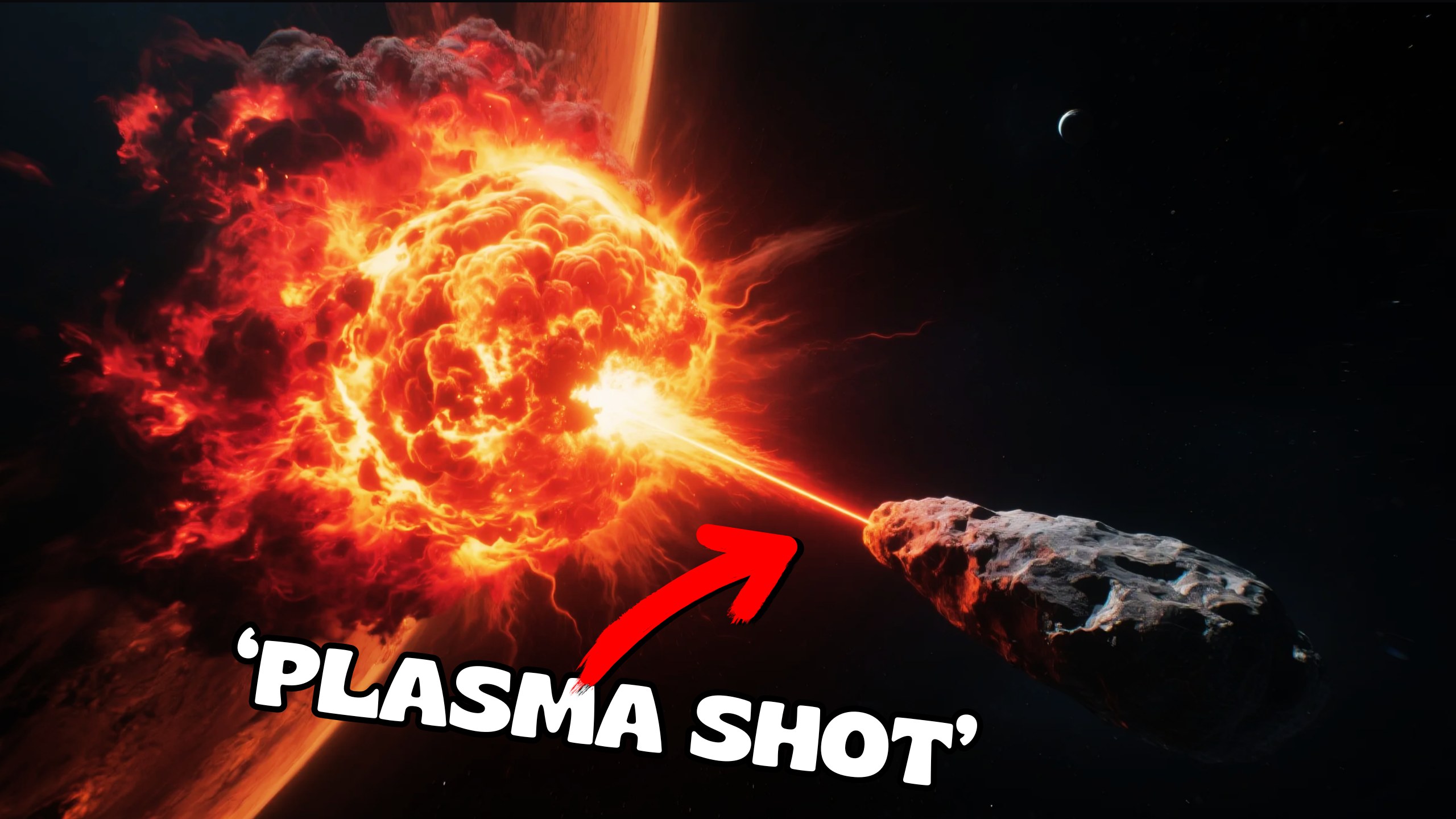
Imaginem uma bala de canhão cósmica, disparada pelo nosso próprio Sol, pronta para interceptar um objeto que viajou de galáxia a galáxia, alheio às dinâmicas internas do nosso sistema. Esta não é uma ficção científica, mas sim o cenário dramático que se desenrolou recentemente envolvendo o cometa 3I/ATLAS, o terceiro objeto interestelar já detectado em nossa vizinhança.

Estamos falando de um evento de imensa raridade, pois pela primeira vez, cientistas tiveram a expectativa — e o medo — de testemunhar um “tiro de plasma” ejetado pela nossa estrela colidindo com um visitante de fora. Tal colisão, se ocorrida, não apenas rasgaria o cometa, mas forneceria dados inestimáveis sobre como esses corpos celestes “estranhos” reagem às intensas forças solares, algo que nunca tivemos a oportunidade de investigar. O mundo científico prendeu a respiração, aguardando se este forasteiro cósmico seria pego em um abraço explosivo de campos magnéticos e partículas carregadas. O ATLAS estava em perigo iminente.
Fluxos intensos de material ejetado pelo Sol, muitas vezes chamados de vento solar ou rajadas de plasma, interagem constantemente com os objetos que circulam por aqui. Há pouquíssimo tempo, por exemplo, o cometa SWAN (C/2025 R2) quase teve sua impressionante cauda pulverizada e desconectada por uma dessas rajadas – um evento até certo ponto rotineiro para cometas que residem no nosso Sistema Solar. Essa desconexão, chamada de evento de fragmentação, é conhecida e documentada, mas em cada um desses casos, o objeto atingido sempre foi nativo, criado e moldado pela radiação e pelos materiais presentes na nuvem de Oort e no cinturão de Kuiper. Essa distinção é crucial, pois um corpo interestelar como o 3I/ATLAS, formado em outra região da Via Láctea, pode possuir uma composição, estrutura ou resistência radicalmente diferentes. Portanto, prever o que aconteceria se ele fosse atingido por uma ejeção de massa coronal (CME) era, até agora, um mistério teórico, o que elevava o potencial incidente a uma oportunidade científica sem precedentes.
O motivo do alarme foi um alerta emitido a partir de um modelo de previsão da NASA, que identificou uma trajetória de colisão quase garantida. No dia 19 de setembro, o Sol disparou uma potente Ejeção de Massa Coronal – ou CME. Uma CME é, em termos simples, um gigantesco jato de plasma e campos magnéticos superaquecidos, liberado por erupções violentas na superfície solar. Este material viaja pelo espaço em alta velocidade e foi previsto para cruzar o caminho orbital do cometa 3I/ATLAS entre os dias 24 e 25 de setembro. O choque de uma CME com um cometa nativo costuma desestabilizá-lo e, por vezes, fragmentá-lo ou arrancar sua cauda de íons, transformando drasticamente sua aparência. Os astrônomos de plantão esperavam que o impacto iminente fornecesse a primeira chance real de investigar, em tempo real, os efeitos dinâmicos dessas interações em um material genuinamente “estrangeiro”, capturando dados sobre densidade, estabilidade estrutural e reação do núcleo do cometa em meio ao caos solar.
O prazo de intercepção previsto chegou e passou, mergulhando a comunidade científica em uma incerteza frustrante. Estranhamente, ainda não surgiu nenhuma confirmação oficial e definitiva, seja da NASA, da NOAA (Administração Nacional Oceânica e Atmosférica dos EUA) ou de observatórios solares, indicando que a CME realmente colidiu com o 3I/ATLAS. Isso sugere que o visitante interestelar pode ter conseguido, milagrosamente, “escapar” por pouco do violento “tiro” de plasma solar. Contudo, a ausência de confirmação não é o mesmo que prova de que escapou. Alguns veículos de notícias internacionais especularam que o impacto pode ter ocorrido, embora de forma sutil ou ainda não detectada, enquanto o cometa disparava a impressionantes 219 mil quilômetros por hora em sua rota em direção a Marte. A alta velocidade e a complexidade do monitoramento de objetos nessa região do espaço, somadas à rapidez com que ele está se aproximando do Sol, contribuem para essa dificuldade de emissão de um veredito oficial.

A urgência científica em torno deste cometa é amplificada pela sua extrema raridade. Em toda a história da observação astronômica, apenas três objetos oriundos de fora do nosso Sistema Solar foram confirmados: o asteroide em forma de charuto ‘Oumuamua, descoberto em 2017; o Cometa Borisov, detectado em 2019; e, finalmente, o Cometa 3I/ATLAS, avistado em julho deste ano. Nenhum desses três ilustres visitantes foi alvo de uma CME em sua passagem, o que fazia de um possível incidente com o ATLAS uma chance que a ciência jamais teria novamente a curto prazo. Essa oportunidade era duplamente urgente porque o ATLAS está prestes a desaparecer de nossa vista terrestre. Em questão de semanas, ele estará do outro lado do Sol, iniciando outubro, à medida que se aproxima de seu ponto máximo de aproximação solar (o chamado periélio), previsto para o final do mês. Coletar dados agora é crucial, antes que ele mergulhe novamente nas profundezas escuras do espaço interestelar.
Paralelamente à ameaça da CME, o cometa 3I/ATLAS apresentou um comportamento luminoso fascinante e sem precedentes que exigiu a atenção imediata dos astrônomos. Desde o início de setembro, o brilho do cometa aumentou colossalmente, cerca de 40 vezes mais intenso. Para contextualizar a magnitude dessa mudança, o cometa passou de uma magnitude aparente de 16 para 12. Na escala astronômica, quanto menor o número, mais brilhante é o objeto – para ser visto a olho nu em céus escuros, ele precisaria ter magnitude inferior a 6. A dramática mudança no número quatro, capturada em imagens icônicas por astrofotógrafos amadores conhecidos por suas contribuições, como Gerald Rhemann e Michael Jäger, confirmou o súbito aumento de atividade. Este fenômeno indica uma violenta e acelerada liberação de gases e gelos que estavam congelados em seu interior, evidenciando que o ATLAS está acordando de forma muito mais enérgica do que o esperado.
O aumento de brilho não apenas intensificou sua luz geral, mas também revelou pistas sobre a composição química deste corpo forasteiro. O site especializado em climatologia espacial, Spaceweather.com, destacou que o brilho do cometa ocorre predominantemente na cor verde. Essa coloração característica tem uma explicação científica fascinante: à medida que o ATLAS se aproxima da intensa radiação solar, ele começa a liberar carbono diatômico. Este gás específico brilha intensamente na cor verde fluorescente quando bombardeado pela luz solar ultravioleta. Estudar esse brilho ajuda os cientistas a entender o tipo de material interestelar que ele carrega. Retornando ao ponto central: a falta de relatórios de fragmentação, perturbação visível, ou detecção de detritos significa que, apesar das previsões, todos os indícios apontam para que o 3I/ATLAS não foi desestabilizado pela CME. A ausência de fragmentos sugere um escape limpo e seguro do disparo de plasma.
O estudo do cometa não se limitou apenas à ameaça solar, mas também se expandiu para tentar entender seu tamanho e sua massa. Medir a massa de um cometa é uma tarefa extraordinariamente complexa. Ao contrário de planetas e luas, onde os cientistas podem usar o movimento de seus satélites naturais para calcular a atração gravitacional e, consequentemente, a massa, um cometa não oferece esse auxílio. Para o 3I/ATLAS, a metodologia exigiu a análise de milhares de observações detalhadas feitas por mais de duzentos telescópios distintos entre maio e setembro. Os astrônomos tiveram que comparar cuidadosamente a trajetória exata que o cometa percorreu no espaço com a rota teórica que ele deveria ter seguido se apenas a gravidade do Sol o afetasse. Qualquer desvio é uma assinatura do escape de material, permitindo estimar a taxa de perda de massa e, assim, reverter os cálculos para determinar a dimensão original do núcleo e sua massa total.
Os resultados dessas análises e comparações complexas chocaram a comunidade. O cometa 3I/ATLAS não é apenas um visitante interestelar raro; ele parece ser um gigante. As estimativas indicam que seu núcleo sólido possui pelo menos cinco quilômetros de diâmetro e carrega uma massa superior a 33 bilhões de toneladas. Para a maioria dos cometas, esses números são astronômicos. Cometas típicos do Sistema Solar geralmente possuem núcleos que medem menos de um ou dois quilômetros. Esses dados levantam a questão monumental: o 3I/ATLAS é o cometa mais massivo de todos os tempos a cruzar o nosso sistema? Seja ele o maior ou apenas um dos grandes, o fato é que ele representa uma janela inigualável para o passado distante de outro sistema estelar. Enquanto ele continua sua rota veloz em direção ao Sol e se prepara para sua fuga final, a comunidade científica celebra o provável escape deste tesouro de 33 bilhões de toneladas, que por pouco não foi engolido ou destruído por um “tiro de plasma” da nossa estrela. O estudo do 3I/ATLAS está apenas começando.
Imagine a cosmic cannonball, fired by our own Sun, poised to intercept an object that has traveled from galaxy to galaxy, oblivious to the internal dynamics of our system. This is not science fiction, but rather the dramatic scenario that recently unfolded involving comet 3I/ATLAS, the third interstellar object ever detected in our neighborhood. We are talking about an event of immense rarity, as for the first time, scientists had the expectation—and fear—of witnessing a “plasma shot” ejected by our star colliding with an outside visitor. Such a collision, if it occurred, would not only tear the comet apart but also provide invaluable data on how these “strange” celestial bodies react to intense solar forces, something we have never had the opportunity to investigate. The scientific world held its breath, waiting to see if this cosmic outsider would be caught in an explosive embrace of magnetic fields and charged particles. ATLAS was in imminent danger.
Intense outflows of material ejected by the Sun, often called solar wind or plasma bursts, constantly interact with objects orbiting our planet. Not long ago, for example, comet SWAN (C/2025 R2) nearly had its impressive tail shredded and disconnected by one of these bursts—a somewhat routine occurrence for comets residing in our Solar System. This disconnection, called a fragmentation event, is known and documented, but in each of these cases, the object struck was always indigenous, created and shaped by the radiation and materials present in the Oort cloud and Kuiper belt. This distinction is crucial, as an interstellar body like 3I/ATLAS, formed in another region of the Milky Way, may have a radically different composition, structure, or strength. Therefore, predicting what would happen if it were struck by a coronal mass ejection (CME) was, until now, a theoretical mystery, which elevated the potential incident to an unprecedented scientific opportunity.
The reason for the alarm was a warning issued by a NASA prediction model, which identified an almost guaranteed collision trajectory. On September 19th, the Sun unleashed a powerful Coronal Mass Ejection – or CME. A CME is, simply put, a gigantic jet of superheated plasma and magnetic fields released by violent eruptions on the solar surface. This material travels through space at high speed and was predicted to cross the orbital path of comet 3I/ATLAS between September 24th and 25th. The collision of a CME with a native comet typically destabilizes it and sometimes fragments it or rips off its ion tail, drastically transforming its appearance. Astronomers on duty hoped that the impending impact would provide the first real opportunity to investigate, in real time, the dynamic effects of these interactions on genuinely “foreign” material, capturing data on the density, structural stability, and reaction of the comet’s nucleus amidst the solar chaos.
The predicted interception deadline has come and gone, plunging the scientific community into frustrating uncertainty. Strangely, no official, definitive confirmation has yet emerged, either from NASA, NOAA (the US National Oceanic and Atmospheric Administration), or solar observatories, indicating that the CME actually collided with 3I/ATLAS. This suggests that the interstellar visitor may have miraculously narrowly avoided the violent blast of solar plasma. However, the lack of confirmation is not the same as proof that it did. Some international news outlets have speculated that the impact may have occurred, albeit subtly or as yet undetected, while the comet was hurtling toward Mars at an impressive 219,000 kilometers per hour (134,000 miles per hour). The high speed and complexity of monitoring objects in this region of space, coupled with the rapidity with which it is approaching the Sun, contribute to the difficulty of issuing an official verdict.
The scientific urgency surrounding this comet is amplified by its extreme rarity. In the entire history of astronomical observation, only three objects originating from outside our Solar System have been confirmed: the cigar-shaped asteroid ‘Oumuamua, discovered in 2017; Comet Borisov, detected in 2019; and, finally, Comet 3I/ATLAS, sighted in July of this year. None of these three illustrious visitors was the target of a CME during its passage, making a possible incident with ATLAS a chance science would never have again in the near future. This opportunity was doubly urgent because ATLAS is about to disappear from our terrestrial view. In a matter of weeks, it will be on the other side of the Sun, beginning in October, as it approaches its closest solar approach (called perihelion), predicted for the end of the month. Collecting data now is crucial, before it plunges back into the dark depths of interstellar space.
Parallel to the CME threat, comet 3I/ATLAS exhibited fascinating and unprecedented luminous behavior that demanded the immediate attention of astronomers. Since early September, the comet’s brightness has increased colossally, about 40 times more intense. To contextualize the magnitude of this change, the comet went from an apparent magnitude of 16 to 12. On the astronomical scale, the lower the number, the brighter the object—to be visible to the naked eye in dark skies, it would need to be below magnitude 6. The dramatic change in magnitude four, captured in iconic images by renowned amateur astrophotographers such as Gerald Rhemann and Michael Jäger, confirmed the sudden increase in activity. This phenomenon indicates a violent and accelerated release of gases and ices that were frozen within its interior, demonstrating that ATLAS is awakening much more energetically than expected.
The increase in brightness not only intensified its overall light but also revealed clues about the chemical composition of this alien body. Spaceweather.com, a website specializing in space weather, highlighted that the comet’s glow is predominantly green. This characteristic coloration has a fascinating scientific explanation: as ATLAS approaches intense solar radiation, it begins to release diatomic carbon. This specific gas glows intensely fluorescent green when bombarded by ultraviolet sunlight. Studying this glow helps scientists understand the type of interstellar material it carries. Returning to the central point: the lack of reports of fragmentation, visible disturbance, or debris detection means that, despite predictions, all evidence points to 3I/ATLAS not being destabilized by the CME. The absence of fragments suggests a clean and safe escape from the plasma blast.
Study of the comet has not been limited to the solar threat alone, but has also expanded to understanding its size and mass. Measuring a comet’s mass is an extraordinarily complex task. Unlike planets and moons, where scientists can use the motion of their natural satellites to calculate gravitational pull and, consequently, mass, a comet offers no such assistance. For 3I/ATLAS, the methodology required analyzing thousands of detailed observations made by more than two hundred different telescopes between May and September. Astronomers had to carefully compare the comet’s exact trajectory through space with the theoretical path it should have taken if only the Sun’s gravity were affecting it. Any deviation is a signature of material escape, allowing them to estimate the rate of mass loss and thus reverse the calculations to determine the nucleus’s original size and total mass.
The results of these complex analyses and comparisons shocked the community. Comet 3I/ATLAS is not just a rare interstellar visitor; it appears to be a giant. Estimates indicate that its solid nucleus is at least five kilometers in diameter and carries a mass exceeding 33 billion tons. For most comets, these numbers are astronomical. Typical Solar System comets typically have nuclei measuring less than one or two kilometers. These data raise the monumental question: is 3I/ATLAS the most massive comet ever to cross our system? Whether it’s the largest or just one of the big ones, the fact remains that it represents an unparalleled window into the distant past of another star system. As it continues its speeding path toward the Sun and prepares for its final escape, the scientific community celebrates the likely escape of this 33-billion-ton treasure, which narrowly avoided being swallowed or destroyed by a “plasma blast” from our star. The study of 3I/ATLAS is just beginning.
Artigos Relacionados


Sobre o Autor

Sou Fabio Russo, desenvolvedor e administrador do site Artesanato Total desde 2015. A mais de 25 anos trabalho com diversos nichos de sites na Internet, sempre presando a qualidade em todos os projetos.
0 Comentários