O Encontro que Revelou o Poder da Fé e o Desconforto da Ignorância: Duas Estátuas, Uma Reação Inesperada.

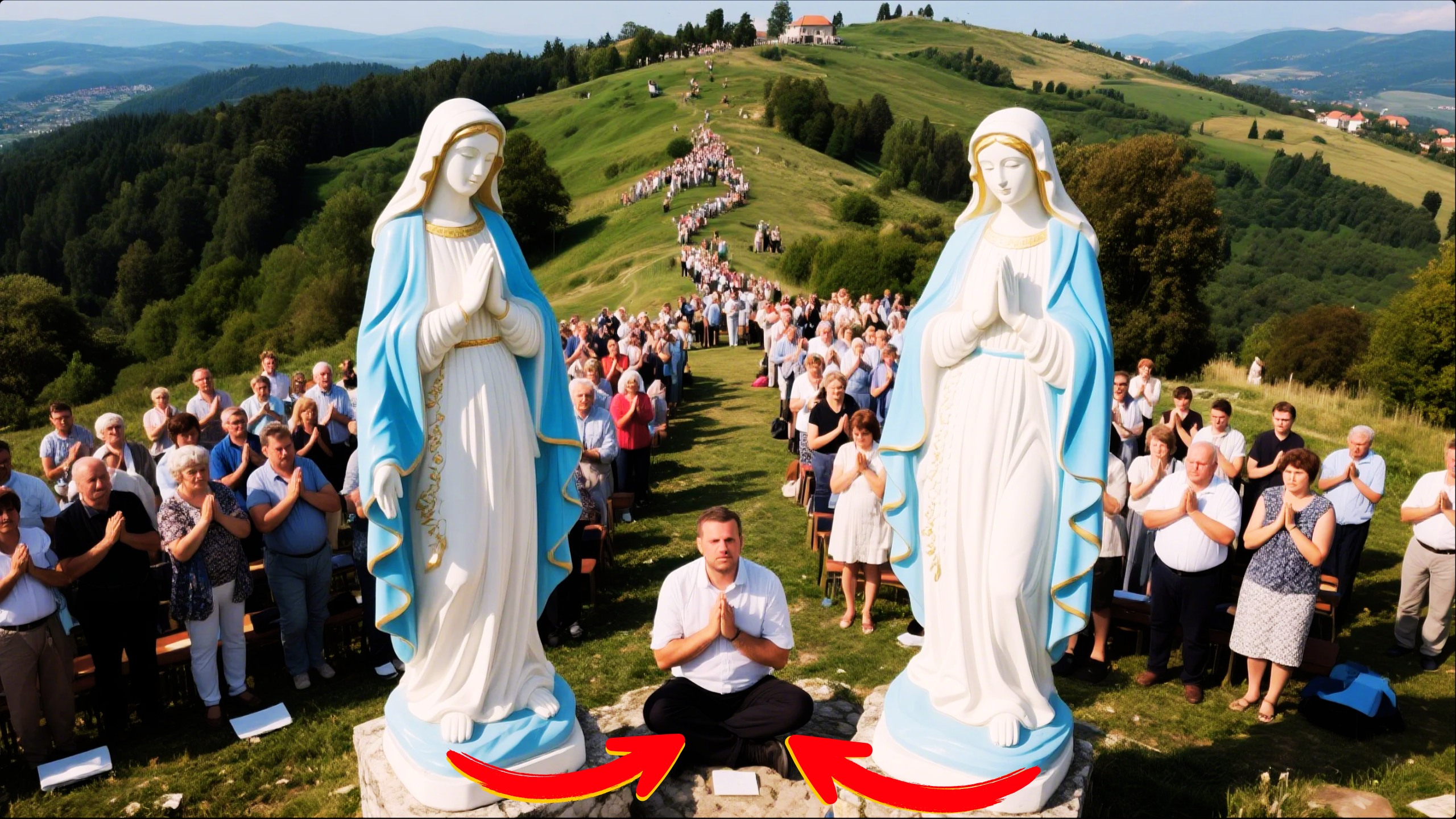
Já imaginou estar em um lugar onde sua fé é vista com estranhamento, talvez até com aversão? Pense em um objeto simples, comum para você, mas que para outra pessoa gera um desconforto profundo, uma reação que beira a incompreensão total.

É sobre um encontro assim que quero falar hoje, uma história real que aconteceu em uma casa simples, onde a presença silenciosa de duas imagens de Nossa Senhora se tornou o catalisador de uma reação inesperada em um visitante que professava outra fé. Prepare-se para mergulhar em uma narrativa que vai além do simples choque de crenças; ela toca na essência do respeito, da comunicação e da força que a fé genuína possui para transformar até os olhares mais céticos. Este não é um conto de fadas, é um recorte da vida, cheio de lições sobre como expressamos o que acreditamos e como lidamos com as diferenças. E enquanto nos preparamos para esta jornada de compreensão, quero te convidar a fazer algo agora mesmo: escreva nos comentários abaixo os nomes de pessoas, amigos, familiares que você sabe que precisam de oração. Vamos uni-los na nossa grande oração com o Rosário no final deste vídeo, confiando à intercessão de Nossa Senhora todas essas intenções.
A casa de Dona Clara sempre foi um refúgio de paz e fé. Em cada canto, um sinal discreto ou evidente de sua profunda devoção católica. No entanto, havia um cantinho especial na sala de estar que atraía a atenção de quem a visitava pela primeira vez: sobre um pequeno aparador de madeira escura, lado a lado, repousavam duas imagens de Nossa Senhora. Não eram idênticas; uma era a clássica imagem de Nossa Senhora Aparecida, com seu manto azul e a postura humilde, vinda de uma peregrinação há muitos anos; a outra, uma delicada Nossa Senhora das Graças, com os braços estendidos, parecendo derramar bênçãos, um presente de sua neta. Para Dona Clara, a presença de ambas ali era natural, representavam aspectos diferentes da mesma Mãe celestial, um lembrete constante de proteção, intercessão e amor maternal que a acompanhava em sua jornada diária. Elas não eram objetos de decoração sem sentido, mas pontos focais para sua oração, silentes testemunhas de terços rezados, de súplicas e agradecimentos murmurados em momentos de alegria e de dor. Era neste ambiente de fé vivida e expressa que um encontro inusitado estava prestes a ocorrer, um encontro que colocaria em evidência a forma como nossas crenças, por mais profundas que sejam, podem ser interpretadas de maneiras radicalmente diferentes por quem não as partilha.
Certo dia, um amigo de longa data de sua família, o Senhor Antônio, que professava uma fé evangélica bastante rígida e centrada exclusivamente na divindade de Jesus Cristo e na leitura direta da Bíblia, fez uma visita à Dona Clara. Eles se conheciam há anos, compartilhando histórias de família e preocupações cotidianas, mas raramente tocavam no assunto fé, cientes de suas diferenças. Antônio era um homem bom, honesto e sincero em suas convicções, mas via com grande reserva, para não dizer desaprovação, qualquer tipo de imagem ou símbolo religioso que não fossem a cruz vazia. Para ele, a Bíblia era clara: “Não farás para ti imagem de escultura… Não te encurvarás a elas nem as servirás” ( visto em Êxodo capítulo 20 versículo 4 até o 5), e essa passagem ecoava fortemente em sua interpretação da fé, levando-o a considerar qualquer uso de imagens na prática religiosa como idolatria, uma forma de adoração indevida a algo criado, desviando o foco do único e verdadeiro Deus. Ele acreditava que a relação com o divino deveria ser direta, sem mediadores visuais ou intercessores humanos, mesmo que elevados como a Virgem Maria.
Ao ser conduzido à sala de estar por Dona Clara, o olhar de Antônio recaiu imediatamente sobre o aparador. Ele parou. Seu semblante, antes relaxado e amigável, começou a mudar sutilmente. Primeiro, um franzir de testa quase imperceptível, depois, um leve aperto nos lábios. Ele olhou para a imagem de Nossa Senhora Aparecida, depois para a de Nossa Senhora das Graças, e então voltou o olhar para a primeira, como se precisasse confirmar o que via. A presença de uma imagem já seria um ponto de estranhamento para ele, algo que ele discretamente ignorava ou tentava não notar em outras casas católicas que visitara ao longo da vida. Mas duas, lado a lado, parecia amplificar o que ele considerava um erro teológico, um desvio doutrinário significativo. Era como se a repetição, a dupla presença daquela representação feminina, quebrasse algum limite interno de sua tolerância ou compreensão. Ele não disse nada de imediato, mas a tensão no ar era palpável para Dona Clara, que percebeu a mudança em seu comportamento. O que Dona Clara via como um sinal de amor e reverência, Antônio via com desconforto e profunda preocupação espiritual, e essa diferença de perspectiva estava prestes a se manifestar de forma direta e inesperada.
O silêncio foi quebrado por Antônio, cuja voz soou um pouco tensa e carregada de uma mistura de confusão e perplexidade. “Dona Clara…”, ele começou, hesitando por um momento, “eu não quero ser indelicado, de verdade, mas… por que a senhora tem… duas? Duas imagens? Não é… não é idolatria isso?”. A pergunta, embora feita com uma tentativa de cuidado, atingiu Dona Clara no cerne de sua fé. Não era a primeira vez que enfrentava questionamentos sobre suas imagens, mas a forma como Antônio “não suportou o que viu”, a evidente agitação e desconforto que transpareciam em seu rosto e em sua voz ao confrontar a dupla presença das estátuas, era algo novo e intenso. Ele não estava apenas perguntando por curiosidade; ele estava expressando um incômodo profundo, uma aversão genuína baseada em sua interpretação bíblica. Para ele, aquela cena representava não apenas um erro, mas algo que ia contra os mandamentos divinos, algo que ele sentia ser seu dever, como irmão em Cristo (em sua visão), apontar. O “não suportou” se manifestou não em um grito ou ataque de raiva, mas em uma expressão de dor espiritual e um impulso urgente para questionar o que ele acreditava ser um caminho errado, um desvio perigoso da adoração devida apenas a Deus.
Dona Clara, com a serenidade que a fé lhe proporcionava e ciente da sinceridade, embora equivocada em sua visão, do amigo, respirou fundo antes de responder. Ela não se sentiu ofendida, mas viu ali uma oportunidade, não de converter Antônio, mas de esclarecer e testemunhar a beleza de sua devoção. “Antônio, meu amigo”, começou ela com calma, “eu entendo sua preocupação, e agradeço por perguntar abertamente. Mas não, isso não é idolatria. Para nós católicos, essas imagens não são Deus, e nós não as adoramos. Adoração é reservada unicamente a Deus Pai, Filho e Espírito Santo. O que fazemos diante dessas imagens é veneração. Elas são representações visuais, lembretes, assim como você talvez tenha uma foto da sua esposa ou dos seus filhos na sua carteira ou na parede da sua casa.” Ela fez uma pausa, buscando as palavras certas que pudessem tocar o coração do amigo. “Quando você olha para a foto da sua esposa, você não a adora, certo? Você a ama, se lembra dela, ela te conecta à pessoa real que você ama. É a mesma coisa com as imagens de Nossa Senhora. Elas nos lembram de Maria, a Mãe de Jesus, a mulher que disse ‘sim’ ao plano de Deus, que esteve ao lado de Jesus em toda a sua vida, até a cruz. Ela é a Mãe de Deus, e por isso, para nós, ela é especial. As imagens nos ajudam a focar nossa oração, a nos lembrar de sua história e de seu papel na história da salvação.”
Ela continuou, explicando que a presença de duas imagens, ou até mais em algumas casas ou igrejas, não significa que estejam adorando ‘duas Marias’ ou deusas diferentes. “São apenas diferentes representações da mesma Mãe, talvez sob títulos diferentes que lembram aparições ou aspectos de sua intercessão, como Aparecida, padroeira do nosso Brasil, ou das Graças, que lembra seu poder de interceder por nós. Elas nos convidam a olhar para Maria como um modelo de fé, de humildade, de obediência a Deus. E quando rezamos o terço ou o rosário, muitas vezes diante de uma imagem dela, não estamos rezando para a imagem, ou para Maria como se ela fosse Deus. Estamos meditando sobre a vida de Jesus, sobre os mistérios da salvação, e pedindo a intercessão de Maria, a mãe dele e nossa mãe, para que leve nossas preces a Deus, assim como ela intercedeu nas Bodas de Caná, dizendo ‘Fazei tudo o que Ele vos disser’.” Dona Clara explicou que, na fé católica, Maria é vista como um canal de graça, uma intercessora poderosa junto a seu Filho, que é o único mediador entre Deus e os homens, mas que sua Mãe tem um lugar especial em seu coração e, portanto, também no coração dos fiéis.
A explicação de Dona Clara não veio acompanhada de argumentos acalorados ou citações bíblicas em tom de debate, mas sim de um testemunho sereno e sincero de sua vivência de fé. Ela falou com o coração, compartilhando a alegria e o consolo que a devoção a Maria lhe trazia. Antônio ouvia atentamente, o desconforto inicial ainda presente em seu rosto, mas misturado agora com uma visível reflexão. Ele não estava sendo convencido a adotar a devoção mariana, mas estava sendo convidado a entender a perspectiva de Dona Clara, a ver as imagens não como objetos de idolatria, mas como símbolos que possuíam um profundo significado espiritual e teológico dentro da fé católica. O que ele não suportou ver inicialmente – a presença das imagens, a aparente “adoração” – começou a ser desmistificado pela clareza e caridade da explicação. Ele pôde perceber que, por trás das imagens, havia uma intenção sincera de se conectar com o sagrado, de honrar a Mãe de Jesus e de buscar auxílio espiritual. Aquele encontro, provocado pela reação a algo tão simples quanto duas estátuas, transformou-se em um momento de diálogo inter-religioso inesperado, mostrando que a comunicação respeitosa pode abrir portas para a compreensão mútua, mesmo que as divergências teológicas permaneçam. Antônio não mudou sua fé, mas deixou a casa de Dona Clara com um olhar diferente, menos julgador e mais compreensivo sobre a fé de sua amiga, percebendo que a devoção a Maria na Igreja Católica está intrinsecamente ligada à pessoa de Jesus Cristo.

Essa história nos lembra que, em nosso dia a dia, a fé não é apenas algo que guardamos para nós; ela se manifesta, se expressa, e nem sempre de formas que são imediatamente compreendidas por todos. Assim como a devoção de Dona Clara se expressava nas imagens em sua casa, a nossa fé se expressa na maneira como vivemos, perdoamos, buscamos a paz, nos esforçamos pela conversão do coração e pela conversão de outros, e, fundamentalmente, na constância de nossas orações. A oração diária, seja ela o Rosário, a leitura da Bíblia, ou simplesmente um diálogo sincero com Deus, é o nosso alimento espiritual, a nossa força para enfrentar os desafios e para sermos testemunhas em um mundo que muitas vezes não entende, ou até “não suporta”, a manifestação do sagrado. É através da oração que fortalecemos nossa fé e recebemos a graça para vivermos de acordo com os ensinamentos de Cristo, perdoando aqueles que nos ofendem, cultivando a paz em nossos corações e sendo instrumentos de conversão para aqueles que ainda não conhecem plenamente o amor de Deus. E é na força da comunidade e da intercessão que encontramos um suporte ainda maior. Por isso, reitero o pedido: comente agora mesmo os nomes de pessoas, parentes, amigos que você deseja colocar em nossas orações com o Rosário. Vamos elevar juntos essas intenções, confiando no poder da oração e na intercessão de Nossa Senhora por todos aqueles que necessitam da graça de Deus.
O que você achou dessa história? Já presenciou ou vivenciou algo parecido, onde a sua fé ou a fé de alguém foi mal compreendida ou gerou desconforto? Qual a sua reflexão sobre como podemos viver e expressar nossa fé de forma autêntica, ao mesmo tempo em que buscamos a compreensão e o respeito mútuo com aqueles que pensam diferente? Deixe seu comentário aqui embaixo, sua opinião é muito importante para enriquecer nossa conversa. Se esta história tocou você de alguma forma, se trouxe uma nova perspectiva ou simplesmente te fez refletir, por favor, deixe o seu LIKE para que este conteúdo alcance mais pessoas. E se você ainda não é inscrito no canal, se inscreva agora e ative o sininho para não perder nenhum de nossos próximos vídeos. Muito obrigado por assistir, por partilhar este momento de reflexão e, principalmente, por se unir a nós em oração. Que Deus te abençoe e Nossa Senhora te cubra com seu manto de amor e proteção. Fique com Deus!
Have you ever imagined being in a place where your faith is viewed with strangeness, perhaps even aversion? Think of a simple object, common to you, but that for someone else generates profound discomfort, a reaction that borders on total incomprehension. It is about an encounter like this that I want to talk about today, a true story that took place in a simple house, where the silent presence of two images of Our Lady became the catalyst for an unexpected reaction in a visitor who professed another faith. Prepare yourself to immerse yourself in a narrative that goes beyond the simple clash of beliefs; it touches on the essence of respect, communication and the power that genuine faith has to transform even the most skeptical looks. This is not a fairy tale, it is a slice of life, full of lessons on how we express what we believe and how we deal with differences. And as we prepare for this journey of understanding, I want to invite you to do something right now: write in the comments below the names of people, friends, family members who you know need prayer. Let us join them in our great prayer with the Rosary at the end of this video, entrusting all these intentions to the intercession of Our Lady.
Dona Clara’s house has always been a haven of peace and faith. In every corner, there was a discreet or evident sign of her deep Catholic devotion. However, there was a special corner in the living room that attracted the attention of those who visited for the first time: on a small dark wooden sideboard, side by side, rested two images of Our Lady. They were not identical; one was the classic image of Our Lady of Aparecida, with her blue cloak and humble posture, returned from a pilgrimage many years ago; the other, a delicate Our Lady of Graces, with her arms outstretched, seeming to pour out blessings, a gift from her granddaughter. For Dona Clara, the presence of both there was natural; they represented different aspects of the same heavenly Mother, a constant reminder of the protection, intercession and maternal love that accompanied her on her daily journey. They were not meaningless decorative objects, but focal points for her prayer, silent witnesses to rosaries recited, supplications and thanksgivings murmured in moments of joy and sorrow. It was in this environment of lived and expressed faith that an unusual encounter was about to occur, an encounter that would highlight the way in which our beliefs, however profound they may be, can be interpreted in radically different ways by those who do not share them.
One day, a longtime friend of her family, Mr. Antônio, who professed a rather rigid evangelical faith focused exclusively on the divinity of Jesus Christ and the direct reading of the Bible, paid a visit to Dona Clara. They had known each other for years, sharing family stories and daily concerns, but they rarely touched on the subject of faith, aware of their differences. Antônio was a good man, honest and sincere in his convictions, but he viewed with great reservation, not to say disapproval, any type of religious image or symbol other than the empty cross. For him, the Bible was clear: “You shall not make for yourself any carved image… You shall not bow down to them or serve them” (see Exodus chapter 20 verses 4 through 5), and this passage resonated strongly in his interpretation of faith, leading him to consider any use of images in religious practice as idolatry, a form of improper worship of something created, diverting the focus from the one and true God. He believed that the relationship with the divine should be direct, without visual mediators or human intercessors, even if elevated like the Virgin Mary.
As Dona Clara led him into the living room, Antônio’s gaze immediately fell on the sideboard. He stopped. His expression, previously relaxed and friendly, began to change subtly. First, an almost imperceptible frown, then a slight tightening of the lips. He looked at the image of Our Lady of Aparecida, then at that of Our Lady of Graces, and then back at the first, as if he needed to confirm what he saw. The presence of one image would already be a point of strangeness for him, something he discreetly ignored or tried not to notice in other Catholic homes he had visited throughout his life. But two, side by side, seemed to amplify what he considered a theological error, a significant doctrinal deviation. It was as if the repetition, the double presence of that female representation, broke some internal limit of his tolerance or understanding. He said nothing right away, but the tension in the air was palpable to Dona Clara, who noticed the change in his behavior. What Dona Clara saw as a sign of love and reverence, Antonio saw with discomfort and deep spiritual concern, and this difference in perspective was about to manifest itself in a direct and unexpected way.
The silence was broken by Antonio, whose voice sounded a little strained and charged with a mixture of confusion and perplexity. “Dona Clara…” he began, hesitating for a moment, “I don’t want to be rude, really, but… why do you have… two? Two images? Isn’t… isn’t that idolatry?” The question, although asked with an attempt at caution, struck Dona Clara at the core of her faith. It wasn’t the first time she had faced questions about her images, but the way Antonio “couldn’t bear what he saw,” the evident agitation and discomfort that shone on his face and in his voice when confronted with the dual presence of the statues, was something new and intense. He wasn’t just asking out of curiosity; he was expressing a deep discomfort, a genuine aversion based on his biblical interpretation. To him, the scene represented not just a mistake, but something that went against God’s commandments, something he felt it was his duty as a brother in Christ (in his view) to point out. His “could not bear it” manifested itself not in a shout or a fit of rage, but in an expression of spiritual pain and an urgent urge to question what he believed to be a wrong path, a dangerous deviation from the worship due to God alone.
Dona Clara, with the serenity that faith gave her and aware of her friend’s sincerity, albeit mistaken in her vision, took a deep breath before answering. She did not feel offended, but she saw an opportunity, not to convert Antonio, but to clarify and testify to the beauty of her devotion. “Antonio, my friend,” she began calmly, “I understand your concern, and I thank you for asking openly. But no, this is not idolatry. For us Catholics, these images are not God, and we do not worship them. Worship is reserved solely for God the Father, Son, and Holy Spirit. What we do before these images is veneration. They are visual representations, reminders, just as you might have a picture of your wife or children in your wallet or on the wall of your house.” She paused, searching for the right words that would touch her friend’s heart. “When you look at a picture of your wife, you don’t worship her, right? You love her, you remember her, she connects you to the real person you love. It’s the same with images of Our Lady.
They remind us of Mary, the Mother of Jesus, the woman who said ‘yes’ to God’s plan, who was by Jesus’ side throughout his life, even to the cross. She is the Mother of God, and that’s why she’s special to us. The images help us focus our prayer, remind us of her story and her role in the history of salvation.” She continued, explaining that the presence of two images, or even more in some homes or churches, does not mean that they are worshipping ‘two Marys’ or different goddesses. “They are simply different representations of the same Mother, perhaps under different titles that recall apparitions or aspects of her intercession, such as Aparecida, patron saint of our Brazil, or the Graces, which recalls her power to intercede for us. They invite us to look to Mary as a model of faith, of humility, of obedience to God. And when we pray the rosary, often before an image of her, we are not praying to the image, or to Mary as if she were God. We are meditating on the life of Jesus, on the mysteries of salvation, and asking for the intercession of Mary, his mother and our mother, to carry our prayers to God, just as she interceded at the Wedding at Cana, saying, ‘Do whatever He tells you.'” Dona Clara explained that, in the Catholic faith, Mary is seen as a channel of grace, a powerful intercessor with her Son, who is the only mediator between God and men, but that his Mother has a special place in her heart and, therefore, also in the hearts of the faithful.
Dona Clara’s explanation was not accompanied by heated arguments or biblical quotations in a tone of debate, but rather by a calm and sincere testimony of her experience of faith. She spoke from the heart, sharing the joy and comfort that devotion to Mary brought her. Antônio listened attentively, the initial discomfort still present on his face, but now mixed with visible reflection. He was not being convinced to adopt Marian devotion, but he was being invited to understand Dona Clara’s perspective, to see the images not as objects of idolatry, but as symbols that had a deep spiritual and theological meaning within the Catholic faith. What he could not bear to see initially – the presence of the images, the apparent “adoration” – began to be demystified by the clarity and charity of the explanation. He was able to perceive that, behind the images, there was a sincere intention to connect with the sacred, to honor the Mother of Jesus and to seek spiritual help. That encounter, sparked by a reaction to something as simple as two statues, turned into an unexpected moment of interreligious dialogue, showing that respectful communication can open doors to mutual understanding, even if theological differences remain. Antônio did not change his faith, but he left Dona Clara’s house with a different, less judgmental and more understanding view of his friend’s faith, realizing that devotion to Mary in the Catholic Church is intrinsically linked to the person of Jesus Christ.
This story reminds us that, in our daily lives, faith is not just something we keep to ourselves; it manifests itself, expresses itself, and not always in ways that are immediately understood by everyone. Just as Dona Clara’s devotion was expressed in the images in her home, our faith is expressed in the way we live, forgive, seek peace, strive for the conversion of our hearts and the conversion of others, and, fundamentally, in the constancy of our prayers. Daily prayer, whether it be the Rosary, reading the Bible, or simply a sincere dialogue with God, is our spiritual nourishment, our strength to face challenges and to be witnesses in a world that often does not understand, or even “cannot bear”, the manifestation of the sacred. It is through prayer that we strengthen our faith and receive the grace to live according to the teachings of Christ, forgiving those who offend us, cultivating peace in our hearts and being instruments of conversion for those who do not yet fully know the love of God. And it is in the strength of community and intercession that we find even greater support. Therefore, I reiterate the request: comment right now the names of people, relatives, friends that you would like to include in our prayers with the Rosary. Let us raise these intentions together, trusting in the power of prayer and in the intercession of Our Lady for all those who need God’s grace.
What did you think of this story? Have you ever witnessed or experienced something similar, where your faith or someone else’s faith was misunderstood or caused discomfort? What is your reflection on how we can live and express our faith authentically, while seeking understanding and mutual respect with those who think differently? Leave your comment below, your opinion is very important to enrich our conversation. If this story touched you in any way, if it brought you a new perspective or simply made you reflect, please leave your LIKE so that this content reaches more people. And if you are not yet subscribed to the channel, subscribe now and activate the bell so you don’t miss any of our upcoming videos. Thank you very much for watching, for sharing this moment of reflection and, above all, for joining us in prayer. May God bless you and Our Lady cover you with her mantle of love and protection. May God be with you!
Artigos Relacionados


Sobre o Autor

Sou Fabio Russo, desenvolvedor e administrador do site Artesanato Total desde 2015. A mais de 25 anos trabalho com diversos nichos de sites na Internet, sempre presando a qualidade em todos os projetos.
0 Comentários