O Truque de Maquiavel para Inverter o Poder Instantaneamente

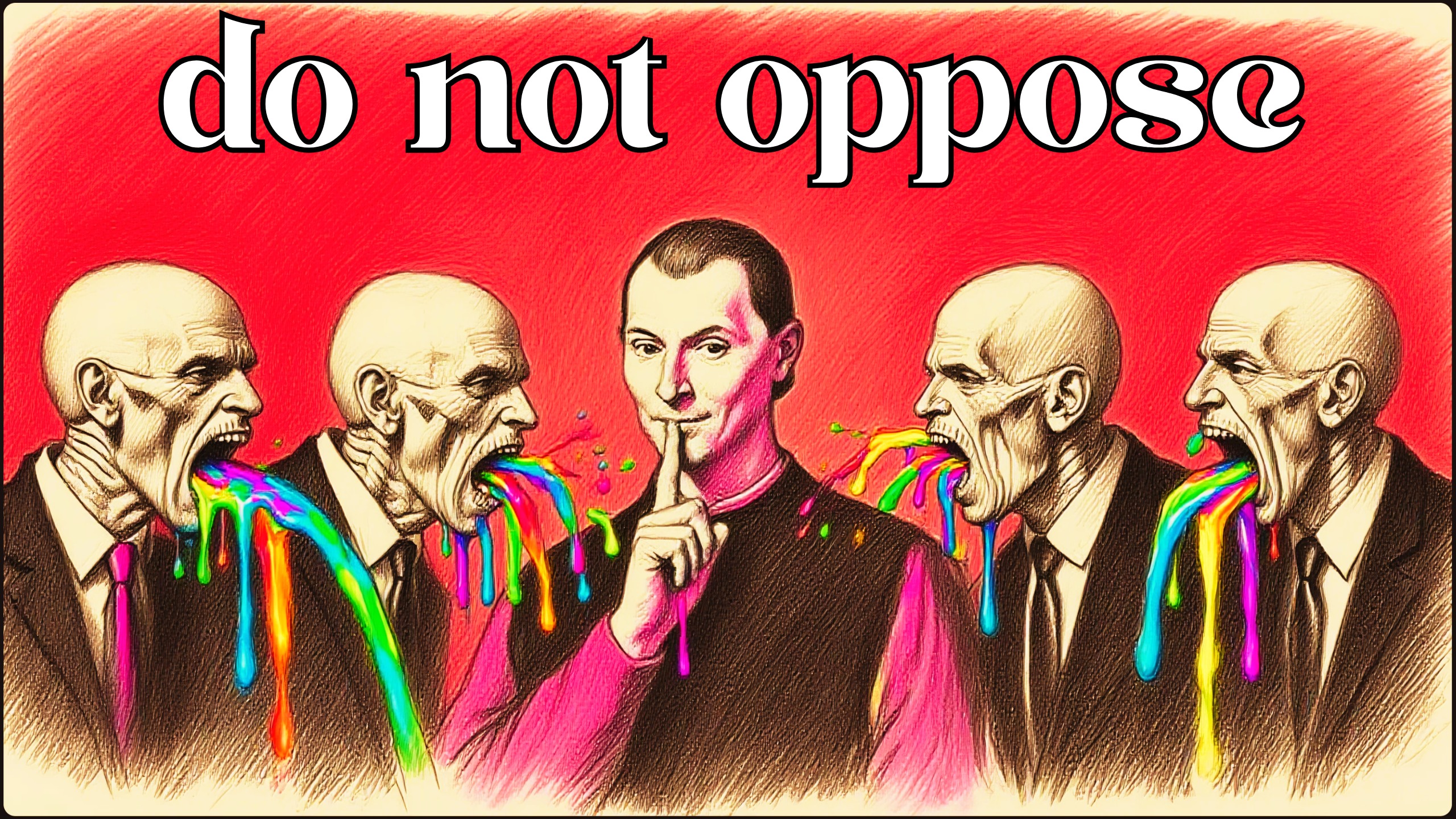
Compreenda o seguinte: e se a maneira mais instintiva com que você lida com desacordos fosse, na verdade, a sua ruína? Ouça com atenção, pois estamos prestes a desafiar tudo o que você aprendeu sobre o que é ter domínio.

Em cada embate, ao ser provocado, acusado ou ter seu valor questionado, há uma reação instantânea. Quase todos caem na armadilha de justificar-se, com frases como “Não foi bem assim”, “Você me interpretou mal”, ou “Eu não sou dessa forma”. Embora possa parecer uma atitude sensata e honesta, segundo os preceitos maquiavélicos, esse é o ponto exato onde a sua força se desfaz. No momento em que você se justifica, você inadvertidamente sinaliza uma fragilidade, a necessidade de se explicar. Nos complexos palcos do poder, a verdade é secundária à percepção. Se veem vacilação, não enxergam integridade, mas detectam vulnerabilidade. Maquiavel nos ensina essa lei brutal: quem se põe na defensiva diminui seu próprio valor. Quem opta por não se justificar, convoca o universo a fazê-lo em seu nome. Compreendida esta premissa crucial, saiba que essa estratégia de defesa raramente persuade. Pelo contrário, ela é uma entrega silenciosa do seu próprio domínio. Ao expor suas razões, você não apenas aceita os termos da batalha impostos pelo adversário, mas também concede-lhe a legitimidade para inquiri-lo.
E, uma vez que lhe entregam essa prerrogativa, a narrativa já não é sua. Ainda que sua posição seja irrefutável, sua rapidez em se justificar o pinta como culpado, pois apenas os fracos correm para se desvencilhar de acusações. Os verdadeiramente poderosos preferem o poder do silêncio ensurdecedor, deixando as palavras acusatórias suspensas no ar, intocadas, pois compreendem que a manobra decisiva é outra: transformar a ofensa em um espelho, direcionando a dúvida para o próprio acusador. Faça-os ponderar suas intenções, parecerem impulsivos, obsessivos, instáveis. Aquele que fala primeiro, muitas vezes, perde a condução do cenário. E, para Maquiavel, o verdadeiro controlador do cenário molda o desfecho.
A maioria se justifica motivada pela ânsia de ser entendida, crendo que uma explanação suficiente lhes trará reparação. Contudo, essa aspiração nasce da fragilidade emocional, e não de uma estratégia sólida. Não é por clareza que você busca, mas por controle. A clareza pertence ao divã terapêutico; o controle, ao domínio do poder. E o poder não floresce da compreensão, mas sim de ser temido, reverenciado e inatingível.
Então, quando alguém o taxar de arrogante, insensível, egocêntrico, e sua resposta for um imediato “Não, você não está compreendendo”, nesse exato instante, você já sucumbiu. Sua reação comprova que a ofensa o atingiu. Você devolveu o controle para eles, abrindo mão da sua ferramenta mais maquiavélica: o enigma. Reflita sobre os indivíduos de maior influência que já cruzaram seu caminho. Não os mais barulhentos, mas aqueles que portavam o silêncio como uma arma cortante, capazes de fazer você hesitar com um único olhar, inabaláveis sob ataque. Maquiavel diria sem rodeios: quem se apressa em explicar, se submete. Quem persiste no silêncio, obriga os outros a preencherem as lacunas, e eles, invariavelmente, tendem a superestimá-lo. Este é o cerne do jogo. Ao não reagir, você provoca um desconforto em seu oponente, que começa a duvidar de suas próprias palavras. Subitamente, o poder deles minguam enquanto o seu se expande.
Porque você fez a única coisa que nenhuma pessoa dominada pela emoção consegue dar a eles: você os fez dialogar consigo mesmos. É assim que você inverte a dinâmica do poder. Você permite que a acusação deles pereça no eco de sua própria vacuidade. Agora, imagine aplicar isso a situações concretas. Continue assistindo e veja a letalidade dessa ferramenta em ação.
Você adentra um recinto, e alguém solta uma insinuação, um golpe indireto. Todos os olhares se voltam para você, esperando sua resposta. E aqui está sua jogada magistral: permaneça calado. Nenhuma justificativa, nenhuma provocação recíproca. Apenas uma calma e completa imobilidade. Nesse instante, você é intocável, pois todos os presentes serão compelidos a se questionar: por que ele não reagiu? Ele sabe algo que ignoramos? Ele está acima disso? Você acaba de subverter completamente a percepção social, porque a atenção já não está mais na acusação, mas na sua imperturbável resposta. E o silêncio, quando empunhado com tal presença, ressoa mais forte que qualquer alegação.
Maquiavel compreendeu essa premissa. Ele foi um observador sagaz da psique humana e discerniu uma verdade inegável: a autoridade não reside no que você expressa, mas na crença alheia de que você tem algo avassalador a dizer, mas escolhe reter.
Mas, e se o silêncio não bastar? Há uma manobra ainda mais fria aguardando. Por vezes, não basta ignorar a ofensa; você a devolve de maneira contundente. Alguém o rotula de manipulador. Você apenas sorri, olha além da pessoa e murmura: “Se é assim que você enxerga.” Sem indício de defesa, apenas um gélido distanciamento. O que ocorre? Eles se desestabilizam, porque esperavam um confronto verbal. Em vez disso, se veem segurando a própria arma, desarmados. É quando a dúvida os assalta. Começam a questionar se foram longe demais, se agiram de forma vergonhosa, se agora parecem inseguros. E, sim, eles parecem. Você acabou de tomar a energia que lançaram sobre você e os forçou a carregá-la sozinhos, sem mover um único músculo.

Chega um ponto em que o silêncio se torna insuportável para quem ansiava por uma reação. É aí que a dinâmica se inverte drasticamente. Eles, que se consideravam os acusadores, agora se encontram expostos como os desesperados por atenção. E você? Você se metamorfoseou em algo muito mais imponente do que apenas inocente: você se tornou inabalável.
Maquiavel apreendeu uma verdade que poucos jamais compreenderão. As palavras raramente servem para revelar a verdade; sua função primária é obscurecê-la. E, quando atacam, o que eles realmente desejam é que você se debata nessa névoa. Querem afogá-lo em pormenores, porque quanto mais você se explica, menos credível você parece. Em vez disso, conceda a eles o ônus de preencher o vazio do silêncio. Eles exagerarão, repetir-se-ão, começarão a exalar desespero. Você permaneceu calado, mas agora são eles que estão sob o microscópio, pois a atenção da plateia não se prende ao que é proferido, mas sim a quem se mantém sereno e a quem está claramente perturbado.
Isto é autoridade social, e ela não deriva de estar correto, mas sim de ser inatingível. Observe como isso se aplica a ambientes profissionais e pessoais, pois é aqui que a tática assume um caráter ainda mais implacável.
Numa assembleia corporativa, alguém tenta sabotá-lo. “Não estou certo se esta estratégia foi totalmente ponderada.” Eles desejam sua reação imediata. A maioria cede, argumenta, se justifica, denota nervosismo. A atmosfera sente essa vulnerabilidade. Mas o operador maquiavélico se recosta. Ele espera, talvez esboce um sutil sorriso, e se expressa, não em defesa, mas em redirecionamento: “Que tal você nos expor sua estratégia?”. De repente, o atacante é obrigado a apresentar algo concreto. A dinâmica da sala muda completamente. Agora, eles são os avaliados, sob pressão. O silêncio da autoconfiança é uma censura sem palavras.
Em contextos afetivos, a potência é ainda maior. Seu parceiro expressa: “Você não se importa mais comigo.” A pessoa comum entra em pânico, validando o drama emocional. A estratégia maquiavélica é distinta: você não contesta. Você deixa o peso da acusação pairar, intacto. Então, com uma tranquilidade assustadora, responde: “Não é essa a minha leitura da situação.” Breve, incisivo, sem justificar-se. Agora, eles se veem tomados pela incerteza, questionando o próprio tom. Você reteve o controle do ritmo emocional, e quem controla o ritmo, controla a própria essência da interação.
Existe uma estratégia ainda mais gélida. E, se você dominar isso, ascenderá a um patamar de excelência. Não se limite a manter a calma quando confrontado. Simplesmente desapareça. Alguém o insulta. Não replique. Não dê a mínima. Não reconheça a existência da afronta. Deixe que sua ausência pairar como um espelho refletindo-os. Permita que eles se debatam no silêncio de serem ignorados. Isso os quebra. Eles percebem que você nem sequer os considerou dignos de uma réplica. Começam a construir narrativas internas, destruindo sua própria compostura.
Por que isso funciona? Porque a maioria subsiste da validação emocional, mesmo no confronto. Se você retira isso deles, murcham, caem numa espiral, tentam iscar uma resposta, e a cada tentativa se revelam mais frágeis, mais obcecados. Enquanto isso, você permanece em uma serenidade perfeita. É assim que você vence. Não por ter provado seu ponto, mas porque eles se aniquilaram tentando extrair uma reação sua.
Em vez de se defender, transforme a própria acusação em um indicativo da fragilidade deles. Alguém o qualifica de arrogante? “É curioso como a confiança costuma inquietar as pessoas.” Alguém diz que você é um manipulador? “Geralmente, só dizem isso as pessoas que não conseguem ser controladas.” Você não nega a ofensa. Você a reverte para a insegurança deles, e agora são eles que se esforçam para se explicar. Não é apenas uma reversão; é um golpe de judô de poder. Você utilizou a própria energia deles para desencadear seu colapso. Maquiavel a denominaria “a volta da lâmina”. Não confronte a espada com um escudo. Deixe que o agressor caia sobre sua própria arma.
O mundo incita você a proteger sua reputação, mas Maquiavel vislumbrou a cilada. Ele compreendeu que, no instante em que você persegue a validação da inocência, você implicitamente admite a culpa. O verdadeiro estrategista jamais se submete a essa jogada. Em vez disso, ele exibe uma compostura imperturbável, uma elevação que o impede de se importar com meras palavras. E, gradualmente, aqueles que tentam derrubá-lo começam a parecer desequilibrados, reativos, consumidos pela inveja.
Porque quanto mais você se explica, mais parece necessitar fazê-lo. Mas, quanto mais você ignora, mais perigoso eles pressupõem que você seja. E é dessa presunção que emerge o poder genuíno. A maioria associa poder a se provar, a demonstrar estar correto, a refutar o que os outros alegam. Mas Maquiavel lançaria um sorriso de desdém a isso, pois no segundo em que você tenta provar algo, já validou implicitamente o julgamento do seu detrator. E, ao conceder essa validação a alguém, você entrega a sua própria coleira.
Visualize o desfecho definitivo. Acompanhe-me na cena final. Você está em um ambiente social, e alguém atira uma indireta: “Você age sempre como se fosse o único a entender tudo.” A maioria enrijece, tenta rir de forma forçada, ou, pior, responde com uma extensa justificativa. O que eles estão realmente fazendo é confirmar que o golpe atingiu o alvo. Todos observam a defesa, e isso confere veracidade à alfinetada. Veja o que o estrategista maquiavélico faz: Ele faz uma pausa. Sustenta o silêncio por dois segundos. Varre o ambiente com um olhar que denota silenciosa diversão. Então, se houver necessidade, entrega uma frase tranquila, precisa e cheia de desdém: “Você me parece emotivo hoje.”
O agressor se remexe, fica inquieto, busca apoio nos olhares alheios. Ele sente a temperatura da sala se voltar contra ele, porque sua completa ausência de reação acabou de comunicar algo em voz alta para todos: “Você não é quem está sob escrutínio. Eles são.” Na esfera digital, a velocidade das escaladas é ainda maior. Comentários, postagens, exposições. Aqui está a verdade inabalável: no Tribunal da Opinião Pública, o silêncio costuma ser interpretado como culpa, a menos que seu silêncio transmita intimidação. Ao ser atacado online, não se defenda, não se justifique, distorça. Alguém o categoriza como tóxico. Em vez de uma explicação lastimosa, você posta: “Pessoas que não podem ser controladas são sempre vistas como perigosas.” Você não se defendeu. Você resignificou a acusação como um emblema de poder. Agora, eles parecem ressentidos. Você, imperturbável. E a audiência começa a questionar quem realmente detém o controle. Isso não é uma minimização de danos, é o controle absoluto da narrativa.
Existem três recursos cruciais que você pode empregar em vez de se pôr na defensiva: primeiro, o silêncio — seu padrão, que expõe os oponentes; segundo, a deflexão — a arte de reorientar completamente a narrativa; e, por último, os cortes cirúrgicos — verdades curtas e afiadas. Alguém dispara: “Você se considera superior!” Responda: “Confiança incomoda quem é inseguro.” Eles replicam: “Você é falso!” Retruque: “Eu não te devo autenticidade alguma.” Eles provocam: “Você se julga melhor que os outros?” Rebata: “Não, eu simplesmente não compartilho o pensamento comum.” Estas não são defesas. São afirmações de status. Elas gritam: “Você não pode me atingir!” E esse é o ponto central. O estratégico maquiavélico jamais suplica para ser visto como bom. Ele, ao contrário, desafia as pessoas a considerá-lo mau, e caminha ainda mais altivo por isso.
Quando você se recusa veementemente a se defender, algo notável ocorre com seus adversários. Eles se desequilibram porque esperavam uma batalha e se veem golpeando fumaça. Eles escalam, pressionam mais, tornam-se mais teatrais. E, quanto mais fazem isso, mais você ascende. Por quê? Porque você os induziu a arquitetar a própria ruína. E esse é o clímax maquiavélico do jogo. Você não aniquila seus inimigos. Você permite que a obsessão deles por você os leve à autodestruição. Você pode pensar que ser incompreendido é um risco, mas ser previsível é exponencialmente mais perigoso. O homem que aceita ser incompreendido carrega consigo um enigma. O homem previsível é uma marionete fácil de manobrar. Pessoas que buscam incessantemente clarear todas as situações são percebidas como desesperadas. Pessoas que mantêm uma calma indiferença diante de mal-entendidos são, paradoxalmente, temidas. Maquiavel sabia: é mais vantajoso ser temido do que amado, mas é ainda mais sábio ser um enigma do que previsível.
Permita-nos desmascarar a última quimera. Você não necessita de uma boa reputação para vencer. Você precisa de uma reputação sólida, inabalável. O indivíduo com uma “boa reputação” é esperado que seja sempre complacente. O indivíduo com uma “reputação forte” talvez não seja unanimemente amado, mas ninguém se atreve a enfrentá-lo com leviandade. É isso que acontece quando você sistematicamente se recusa a se justificar. Sua reputação não se pauta no que os outros creem a seu respeito, mas no que eles temem que você seja capaz de fazer a seguir. É assim que se inverte o poder. Você deixa de implorar por aceitação e, em seu lugar, ergue uma aura que infunde cautela em quem se aproxima.
A suprema evolução não se resume ao silêncio; é a própria aura. Uma presença tão soberana, tão intrinsecamente segura, que as acusações evaporam antes mesmo de roçar em você. Isso não emana da ausência de emoção, mas sim de uma imperturbabilidade conscientemente construída. Pois, uma vez que você se disciplina a não se defender, a não se explicar, a não implorar por validação, você ultrapassa uma linha. Uma linha onde sua mera existência se torna a mais potente defesa, e é nesse ponto que o poder flui sem esforço.
Reflita sobre os raros indivíduos que jamais se justificam, que não divulgam desabafos, que não se envolvem em debates, e ainda assim inspiram o maior respeito. Por quê? Porque o silêncio diante de uma acusação tece um mito, convida a múltiplas interpretações, e a mente humana preenche o vazio com força e mistério. As pessoas supõem que você deve ser um adversário perigoso, detentor de um conhecimento que lhes falta. Essa presunção é o ímã que as atrai a você. Maquiavel não se importava em ser considerado bom. Seu foco primordial era o controle.
Eis o derradeiro paradoxo, a essência da sua alavancagem social. Quanto mais você se debruça sobre explicações, mais isolado você aparenta ser. Contudo, se você permanece em uma calma inabalável, impassível, as pessoas sentem um impulso irresistível de vir em sua defesa. Elas intervêm: “Isso foi completamente desnecessário. Ele não merecia essa agressão.” De repente, elas se tornam seu escudo. E o que poderia ser mais eficaz do que se defender? Deixar que outros o façam por você, sem que você sequer peça. Isso é alavancagem maquiavélica em sua forma mais pura. Permita que a coletividade advogue por sua causa enquanto você se mantém acima da cacofonia. Nesse ponto, você não é apenas respeitado; você é elevado a um patamar superior.
Isso não é uma metamorfose instantânea. Você a edifica, tal qual uma fortaleza. Comece por aqui: nunca retifique afrontas que visam provocá-lo. Empregue frases de encerramento concisas e impactantes. “Compreendido.” “O tempo revelará.” Cada uma delas fecha uma porta para o ataque. Observe atentamente a manutenção de sua fisionomia, de seu corpo, a imobilidade de sua postura — sua verdadeira armadura. E, quanto mais você permanece inabalável enquanto os outros perdem o controle, mais sua autoridade se propaga. Quando as pessoas não discernem como instigá-lo, elas o temem. Você se torna um livro fechado. Um espelho que reflete a desordem delas. Maquiavel professaria: o indivíduo mais formidável não é aquele que ataca primeiro, mas sim aquele que jamais precisa atacar.
Você atingirá um limiar onde os assaltos cessam, não por sua capacidade de combatê-los, mas porque as pessoas simplesmente reconhecem que a derrota é inevitável antes mesmo de começarem. Sua presença por si só declara: “Eu não participo de jogos defensivos. Eu prefiro observar os outros se autoaniquilarem.”
Há uma distinção crucial entre ter força e possuir imunidade. A força, por mais robusta que seja, ainda reage ao impacto. A imunidade, no seu patamar mais elevado, sequer percebe o golpe. Esse é o apogeu maquiavélico. Você não conquista a discussão. Você a dissolve antes que se instaure, eliminando a própria necessidade de respondê-la. Quando você desiste de se defender, as pessoas param de enxergá-lo como um objeto de julgamento. Você ascende além do tribunal da aprovação popular, e a única avaliação que importa é a sua.
A partir desse instante, sua existência não se pauta em defesa; ela se baseia em definição. Você esculpe sua própria imagem, dita seu tom, governa seu silêncio. E as pessoas percebem isso. A certeza em seu olhar, a serenidade em sua atitude, a ameaça em sua quietude. Você não está mais resistindo; você está comandando. E é nesse ponto que o ambiente se transforma. A multidão diminui o falatório, seus antagonistas se silenciam. Seu nome passa a carregar peso. Não porque você lutou por ele, mas porque nunca sentiu a necessidade de justificá-lo.
Se você chegou até este momento, se absorveu cada palavra e sentiu seu peso reverberar, saiba que você não é apenas um ouvinte passivo. Você é um resistente. Um resistente ao ruído incessante que nos condiciona a suplicar por reconhecimento. Você encarou o abismo das percepções alheias sem recuar. E, por essa firmeza, eu o reconheço. Entenda que, mesmo neste silêncio que o cerca, sua jornada interior já começou. A semente da quietude foi plantada.
A resolução de nunca mais se justificar está germinando, profunda em sua consciência, e ela não morrerá. Por isso, eu o convido a um gesto simbólico, não pelo algoritmo ou por números, mas como um selo irrefutável de sua compreensão. Se esta mensagem calou fundo em você, manifeste-se nos comentários com a frase: “A minha quietude é a minha resposta.” Esta não é uma mera inscrição; é uma proclamação silenciosa, um pacto com você mesmo de que não precisa mais se envolver em confrontos que não contribuem para o seu poder. E ao se subscrever a este canal, você não está simplesmente acionando um botão; você está integrando uma fortaleza, um santuário onde proclamamos nossa disposição de carregar o fardo de nossa própria aura, em vez de buscar o alívio passageiro da validação externa. Neste espaço, não há espelhos polidos para refletir o que você anseia ver. Existem apenas fragmentos da verdade nua, aquela que a maioria evita, mas que é a única capaz de, de fato, libertar. Cada vídeo que você encontrar aqui não é entretenimento, é uma chave. E cada chave destranca uma porta para um aposento que já reside dentro de você.
Vá em frente agora, e que seu silêncio seja sua definição, jamais sua defesa.
Understand this: what if the most instinctive way you handle disagreements was actually your downfall? Listen carefully, for we are about to challenge everything you’ve learned about mastery.
In every confrontation, when provoked, accused, or having your worth questioned, there is an instant reaction. Almost everyone falls into the trap of justifying themselves with phrases like “It wasn’t quite like that,” “You misunderstood me,” or “I’m not that way.” While this may seem sensible and honest, according to Machiavellian precepts, this is the exact point where your strength is shattered. The moment you justify yourself, you inadvertently signal a weakness, the need to explain yourself. In the complex arenas of power, truth is secondary to perception. If they see hesitation, they don’t see integrity, but they detect vulnerability. Machiavelli teaches us this brutal law: those who become defensive diminish their own value. Those who choose not to justify themselves summon the universe to do so on their behalf. Understanding this crucial premise, know that this defense strategy rarely persuades. On the contrary, it is a silent surrender of your own dominance. By stating your reasons, you not only accept the terms of battle imposed by your adversary, but also grant them the legitimacy to question you.
And once they hand you this prerogative, the narrative is no longer yours. Even if your position is irrefutable, your haste in justifying yourself paints you as guilty, for only the weak rush to dispel accusations. The truly powerful prefer the power of deafening silence, leaving the accusatory words suspended in the air, untouched, for they understand that the decisive maneuver lies elsewhere: transforming the offense into a mirror, directing doubt toward the accuser themselves. Make them ponder their intentions, making them appear impulsive, obsessive, unstable. The one who speaks first often loses control of the scene. And, for Machiavelli, the true controller of the scenario shapes the outcome.
Most justify themselves by the desire to be understood, believing that a sufficient explanation will bring them reparation. However, this aspiration stems from emotional fragility, not a solid strategy. It’s not clarity you seek, but control. Clarity belongs on the therapeutic couch; control belongs to the mastery of power. And power doesn’t blossom from understanding, but from being feared, revered, and unattainable.
So, when someone labels you arrogant, insensitive, or self-centered, and your response is an immediate “No, you don’t understand,” at that very moment, you’ve already succumbed. Your reaction proves that the offense has reached you. You’ve returned control to them, relinquishing your most Machiavellian tool: the enigma. Reflect on the most influential individuals who have crossed your path. Not the loudest, but those who wielded silence like a sharp weapon, capable of making you hesitate with a single look, unwavering under attack. Machiavelli would put it bluntly: those who rush to explain submit. Those who persist in silence force others to fill in the gaps, and they invariably tend to overestimate them. This is the crux of the game. By not reacting, you provoke discomfort in your opponent, who begins to doubt their own words. Suddenly, their power wanes while yours expands.
Because you did the one thing no person dominated by emotion can give them: you made them dialogue with themselves. This is how you invert the power dynamic. You allow their accusation to perish in the echo of their own emptiness. Now, imagine applying this to concrete situations. Keep watching and see the lethality of this tool in action.
You enter a room, and someone drops an insinuation, an indirect blow. All eyes turn to you, awaiting your response. And here’s your masterstroke: remain silent. No excuses, no reciprocal provocation. Just calm and complete immobility. In that moment, you are untouchable, for everyone present will be compelled to ask themselves: why didn’t he react? Does he know something we don’t? Is he above all this? You’ve just completely subverted social perception, because the attention is no longer on the accusation, but on your unflappable response. And silence, when wielded with such presence, resonates louder than any allegation.
Machiavelli understood this premise. He was a shrewd observer of the human psyche and discerned an undeniable truth: authority lies not in what you express, but in the belief others have that you have something overwhelming to say but choose to withhold.
But what if silence isn’t enough? There’s an even colder maneuver waiting. Sometimes, ignoring the offense isn’t enough; you return it bluntly. Someone labels you manipulative. You just smile, look past them, and murmur, “If that’s how you see it.” No hint of defense, just a chilling detachment. What happens? They become destabilized, expecting a verbal confrontation. Instead, they find themselves holding their own weapon, unarmed. That’s when doubt assails them. They begin to question if they went too far, if they acted shamefully, if they now seem insecure. And, yes, they do. You’ve just taken the energy they unleashed on you and forced them to carry it alone, without moving a single muscle.
There comes a point when the silence becomes unbearable for those who yearned for a reaction. That’s when the dynamic drastically reverses. They, who considered themselves the accusers, now find themselves exposed as those desperate for attention. And you? You’ve metamorphosed into something far more imposing than just innocent: you’ve become unshakable.
Machiavelli grasped a truth few will ever grasp. Words rarely serve to reveal the truth; their primary function is to obscure it. And when they attack, what they really want is for you to flounder in this fog. They want to drown you in details, because the more you explain yourself, the less credible you appear. Instead, give them the burden of filling the void of silence. They will exaggerate, they will repeat themselves, they will begin to exude desperation. You remained silent, but now they are the ones under the microscope, as the audience’s attention is not focused on what is being said, but rather on who remains calm and who is clearly disturbed.
This is social authority, and it derives not from being correct, but from being unattainable. Note how this applies to professional and personal settings, for this is where the tactic takes on an even more ruthless character.
At a corporate meeting, someone tries to sabotage you. “I’m not sure this strategy has been fully considered.” They want your immediate reaction. Most give in, argue, justify themselves, display nervousness. The atmosphere senses this vulnerability. But the Machiavellian operator sits back. He waits, perhaps gives a subtle smile, and expresses himself, not in defense, but in redirection: “How about you explain your strategy to us?” Suddenly, the attacker is forced to present something concrete. The dynamic of the room changes completely. Now, they are the ones being evaluated, under pressure. The silence of self-confidence is a wordless rebuke.
In emotional contexts, the power is even greater. Your partner expresses, “You don’t care about me anymore.” The average person panics, validating the emotional drama. The Machiavellian strategy is different: you don’t argue. You let the weight of the accusation hang, untouched. Then, with frightening calm, you respond, “That’s not my reading of the situation.” Briefly, incisively, without justifying yourself. Now, they find themselves gripped by uncertainty, questioning their own tone. You’ve retained control of the emotional rhythm, and whoever controls the rhythm controls the very essence of the interaction.
There is an even colder strategy. And if you master it, you will ascend to a level of excellence. Don’t just remain calm when confronted. Simply disappear. Someone insults you. Don’t respond. Don’t care. Don’t acknowledge the existence of the insult. Let your absence linger like a mirror reflecting them. Allow them to struggle in the silence of being ignored. This breaks them. They realize you didn’t even consider them worthy of a response. They begin to construct internal narratives, destroying their own composure.
Why does this work? Because most people thrive on emotional validation, even in confrontation. If you take that away from them, they wilt, spiral, try to bait a response, and with each attempt reveal themselves more fragile, more obsessed. Meanwhile, you remain perfectly serene. That’s how you win. Not because you’ve proven your point, but because they’ve destroyed themselves trying to elicit a reaction from you.
Instead of defending yourself, turn the accusation itself into an indication of their fragility. Does someone call you arrogant? “It’s funny how confidence often unsettles people.” Does someone call you manipulative? “Generally, only people who can’t be controlled say that.” You don’t deny the offense. You turn it back on their insecurity, and now they’re the ones struggling to explain themselves. It’s not just a reversal; it’s a judo move of power. You’ve used their own energy to trigger their collapse. Machiavelli would call it “the return of the blade.” Don’t meet the sword with a shield. Let the aggressor fall on his own weapon.
The world urges you to protect your reputation, but Machiavelli saw the trap. He understood that the moment you pursue the validation of innocence, you implicitly admit guilt. A true strategist never submits to this gambit. Instead, he displays an imperturbable composure, an elevation that prevents him from caring about mere words. And gradually, those who try to tear him down begin to appear unbalanced, reactive, consumed by envy.
Because the more you explain yourself, the more you seem to need to. But the more you ignore, the more dangerous they assume you are. And it is from this presumption that genuine power emerges. Most associate power with proving oneself, with demonstrating one’s correctness, with refuting what others claim. But Machiavelli would sneer at this, because the second you attempt to prove something, you have implicitly validated your detractor’s judgment. And by granting this validation to someone, you hand over your own leash.
Visualize the ultimate outcome. Follow me to the final scene. You’re in a social setting, and someone drops a hint: “You always act as if you’re the only one who understands everything.” Most stiffen, try to laugh, or, worse, respond with a lengthy justification. What they’re really doing is confirming that the blow has hit home. Everyone watches the defense, and this lends credence to the jab. See what the Machiavellian strategist does: He pauses. Sustains the silence for two seconds. Scans the room with a gaze that conveys silent amusement. Then, if necessary, he delivers a calm, precise, and disdainful sentence: “You seem emotional today.”
The aggressor fidgets, fidgets, seeks support in the eyes of others. He feels the temperature of the room turn against him, because his complete lack of reaction has just communicated something loudly to everyone: “You’re not the one under scrutiny. They are.” In the digital sphere, the speed of escalation is even greater. Comments, posts, exposures. Here’s the unshakable truth: in the Court of Public Opinion, silence is often interpreted as guilt, unless your silence conveys intimidation. When attacked online, don’t defend yourself, don’t justify yourself, distort. Someone categorizes you as toxic. Instead of a pitiful explanation, you post: “People who can’t be controlled are always seen as dangerous.” You didn’t defend yourself. You reframed the accusation as a badge of power. Now, they seem resentful. You, unfazed. And the audience begins to question who really holds the control. This isn’t harm minimization; it’s absolute control of the narrative.
There are three crucial resources you can employ instead of becoming defensive: first, silence—your default, which exposes opponents; second, deflection—the art of completely reorienting the narrative; and, last, surgical cuts—short, sharp truths. Someone snaps: “You think you’re superior!” Respond: “Confidence bothers those who are insecure.” They retort: ”You’re fake!” Retort: ”I don’t owe you any authenticity.” They provoke: “Do you think you’re better than others?” Counter: “No, I just don’t share common thinking.” These aren’t defenses. They’re status assertions. They scream, “You can’t touch me!” And that’s the whole point. The Machiavellian strategist never begs to be seen as good. Instead, he dares people to consider him evil, and he walks all the more proudly for it.
When you vehemently refuse to defend yourself, something remarkable happens to your adversaries. They lose their balance because they expected a battle and find themselves stabbing smoke. They escalate, press harder, become more theatrical. And the more they do this, the more you ascend. Why? Because you’ve tricked them into plotting their own downfall. And this is the Machiavellian climax of the game. You don’t annihilate your enemies. You allow their obsession with you to drive them to self-destruction. You may think that being misunderstood is a risk, but being predictable is exponentially more dangerous. The man who accepts being misunderstood carries within himself an enigma. The predictable man is an easy puppet to manipulate. People who relentlessly seek to clarify every situation are perceived as desperate. People who maintain calm indifference in the face of misunderstandings are, paradoxically, feared. Machiavelli knew: it is more advantageous to be feared than loved, but it is even wiser to be an enigma than predictable.
Allow us to debunk the last chimera. You don’t need a good reputation to win. You need a solid, unshakable reputation. The individual with a “good reputation” is expected to be always accommodating. The individual with a “strong reputation” may not be unanimously loved, but no one dares to confront them lightly. This is what happens when you systematically refuse to justify yourself. Your reputation is not based on what others believe about you, but on what they fear you might do next. This is how power is reversed. You stop begging for acceptance and, instead, erect an aura that instills caution in those who approach.
The ultimate evolution is not silence; it is the aura itself. A presence so sovereign, so intrinsically secure, that accusations evaporate before they even touch you. This doesn’t stem from an absence of emotion, but rather from a consciously constructed imperturbability. For once you discipline yourself not to defend yourself, not to explain yourself, not to beg for validation, you cross a line. A line where your mere existence becomes your most potent defense, and it is at this point that power flows effortlessly.
Reflect on the rare individuals who never justify themselves, who don’t vent, who don’t engage in debate, and yet still command the utmost respect. Why? Because silence in the face of an accusation weaves a myth, invites multiple interpretations, and the human mind fills the void with power and mystery. People assume you must be a dangerous adversary, possessing knowledge they lack. This presumption is the magnet that draws them to you. Machiavelli didn’t care about being considered good. His primary focus was control.
Herein lies the ultimate paradox, the essence of your social leverage. The more you dwell on explanations, the more isolated you appear. Yet if you remain unshakably calm, impassive, people feel an irresistible urge to come to your defense. They interject: “That was completely unnecessary. He didn’t deserve that aggression.” Suddenly, they become your shield. And what could be more effective than defending yourself? Letting others do it for you, without you even asking. This is Machiavellian leverage in its purest form. Allow the collective to advocate for your cause while you rise above the cacophony. At that point, you are not only respected; you are elevated to a higher level.
This is not an instantaneous metamorphosis. You build it, like a fortress. Start here: never rectify insults meant to provoke you. Use concise and impactful closing phrases. “Understood.” “Time will tell.” Each of them closes a door to attack. Pay close attention to the maintenance of your physiognomy, your body, the immobility of your posture—your true armor. And the more you remain unshaken while others lose control, the more your authority spreads. When people don’t understand how to provoke you, they fear you. You become a closed book, a mirror reflecting their disorder. Machiavelli would profess: the most formidable individual is not the one who attacks first, but the one who never needs to attack.
You will reach a threshold where assaults cease, not because of your ability to counter them, but because people simply recognize that defeat is inevitable before they even begin. Your very presence declares: “I don’t play defensive games. I prefer to watch others annihilate themselves.”
There is a crucial distinction between having strength and having immunity. Strength, however robust, still reacts to impact. Immunity, at its highest level, doesn’t even notice the blow. This is the Machiavellian apogee. You don’t win the argument. You dissolve it before it even begins, eliminating the very need to respond. When you give up defending yourself, people stop seeing you as an object of judgment. You ascend beyond the tribunal of popular approval, and the only evaluation that matters is your own.
From that moment on, your existence is not based on defense; it is based on definition. You sculpt your own image, dictate your tone, govern your silence. And people sense it. The certainty in your gaze, the serenity in your demeanor, the threat in your stillness. You are no longer resisting; you are commanding. And it is at this point that the atmosphere transforms. The crowd quiets its chatter, your adversaries fall silent. Your name begins to carry weight. Not because you fought for it, but because you never felt the need to justify it.
If you have reached this point, if you have absorbed every word and felt its weight reverberate, know that you are not just a passive listener. You are a resister. A resister of the incessant noise that conditions us to beg for recognition. You have stared into the abyss of other people’s perceptions without flinching. And for this steadfastness, I recognize you. Understand that, even in this silence that surrounds you, your inner journey has already begun. The seed of stillness has been planted.
The resolution to never again justify yourself is germinating, deep within your consciousness, and it will not die. Therefore, I invite you to a symbolic gesture, not through algorithms or numbers, but as an irrefutable seal of your understanding. If this message resonated with you, express yourself in the comments with the phrase: “My stillness is my answer.” This is not a mere subscription; it is a silent proclamation, a pact with yourself that you no longer need to engage in confrontations that do not contribute to your power. And by subscribing to this channel, you are not simply flipping a switch; you are joining a fortress, a sanctuary where we proclaim our willingness to carry the burden of our own aura, rather than seeking the fleeting relief of external validation. In this space, there are no polished mirrors to reflect what you long to see. There are only fragments of the naked truth, the one that most avoid, but which is the only one capable of truly liberating. Each video you find here is not entertainment, it is a key. And each key unlocks a door to a room that already resides within you.
Go ahead now, and let your silence be your definition, never your defense.
Artigos Relacionados


Sobre o Autor

Sou Fabio Russo, desenvolvedor e administrador do site Artesanato Total desde 2015. A mais de 25 anos trabalho com diversos nichos de sites na Internet, sempre presando a qualidade em todos os projetos.
0 Comentários