Rituais chocantes e estranhos realizados pelos druidas celtas nas antigas florestas da Europa

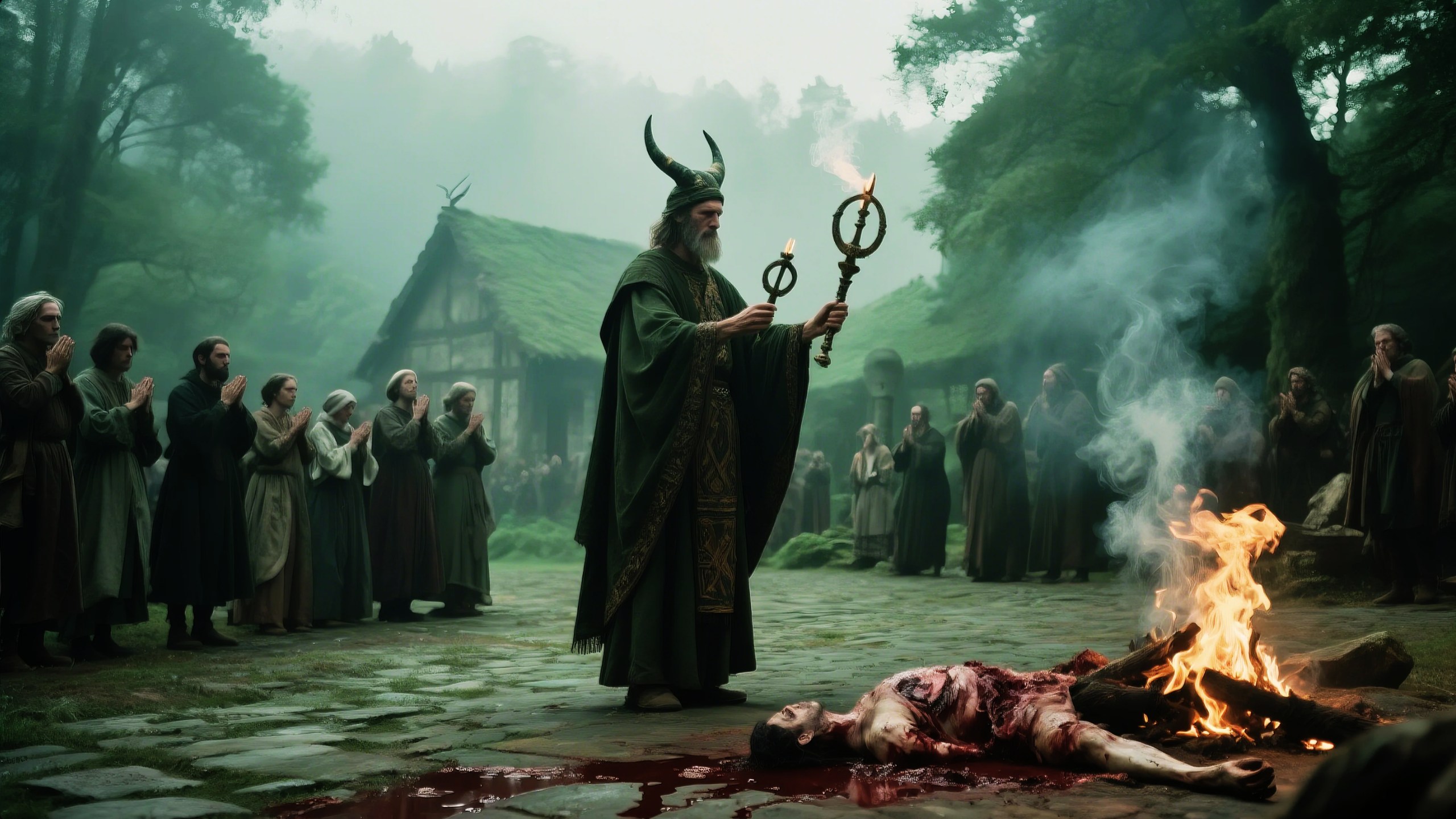
Você está prestes a mergulhar em um tipo de escuridão que a humanidade, talvez, prefira esquecer. Há séculos, muito antes de existirem nossas cidades e nossa tecnologia, relatos chocantes sussurravam sobre certos povos que, sob a orientação de seus líderes espirituais, mergulhavam em práticas tão assustadoras que beiravam o impossível de acreditar.

Pessoas com rostos sérios, figuras encapuzadas e rituais inimagináveis eram o centro de um poder sombrio nas florestas antigas. Era uma forma de fé que hoje nos deixaria de cabelos em pé, uma conexão com o além que exigia preços altos e sacrifícios impensáveis. Prepare-se, porque o que vou te contar vai te assombrar.
Milhares de anos atrás, nas profundezas das florestas densas da Europa, vivia um povo cercado por árvores gigantes e um tipo de magia misteriosa que dominava cada canto da vida. No centro de tudo, estavam os Druidas, figuras que não eram apenas sacerdotes, mas também juízes, professores e curandeiros. Eles eram vistos como a ponte entre o mundo dos homens e o mundo dos deuses, possuindo um conhecimento que poucos entendiam e uma autoridade que ninguém ousava questionar. Suas práticas eram guardadas a sete chaves, sempre realizadas em segredo, longe dos olhares curiosos, geralmente em clareiras escondidas ou sob a sombra de carvalhos milenares, árvores que eles consideravam sagradas e imbuídas de um poder espiritual inigualável. O povo os temia e os reverenciava, porque se dizia que um único olhar ou uma única palavra de um Druida podia mudar o destino de uma família inteira, para o bem ou para o mal, e até mesmo influenciar a fertilidade da terra ou o resultado de uma batalha importante. Sua sabedoria era ancestral, passada de boca em boca por gerações, e seus rituais eram a espinha dorsal de toda a vida naquela sociedade, ditando festas, colheitas e até a morte.
Um dos aspectos mais perturbadores e menos compreendidos das práticas desses Druidas envolvia sacrifícios, especialmente de animais, feitos de maneiras que causavam arrepios na espinha. Não era uma matança simples, mas um ritual complexo e cheio de significado sombrio. Animais como porcos, bois e cavalos eram trazidos para os altares de pedra em meio aos bosques sagrados, não por falta de comida, mas como oferendas a divindades que os Druidas acreditavam controlar o clima, a colheita e a própria sorte. Eles viam nessas ações uma forma de se comunicar com o outro mundo, uma linguagem universal entendida pelos deuses. O sangue era derramado em locais específicos, às vezes em recipientes sagrados ou diretamente na terra, enquanto cânticos monótonos preenchiam o ar, criava-se uma atmosfera pesada e densa. A população, ao observar, ou mesmo ao saber dos detalhes que vazavam sobre esses eventos, reagia com uma mistura de pavor e submissão, pois acreditava-se que falhar em oferecer o suficiente, ou da maneira errada, traria desgraça e seca, doenças para a aldeia, ou até mesmo fomes devastadoras que acabariam com a população. A justificativa dos Druidas era sempre a mesma: tudo era para manter o equilíbrio, aplacar a fúria dos deuses ou obter bênçãos para o povo, e o povo acreditava cegamente.
Mas a coisa ficava ainda mais sinistra quando os rituais envolviam o que relatos antigos descrevem como sacrifícios humanos. Embora muitos evitem falar sobre isso, e alguns insistam que eram apenas histórias contadas pelos inimigos para assustar, os textos mais antigos não escondem certos detalhes macabros. Fala-se que prisioneiros de guerra, criminosos condenados, ou, em momentos de desespero extremo, até mesmo pessoas selecionadas pela sorte, eram levadas aos altares. Um dos rituais mais chocantes envolvia o que ficou conhecido como “O Homem de Vime”: uma estrutura gigante feita de galhos entrelaçados em forma humana era preenchida com seres humanos e animais, e depois, em meio a gritos e orações guturais, era incendiada. O fogo purificador, para eles, era uma forma de enviar as almas mais rapidamente ao outro lado, uma ponte de fumaça e sofrimento até os deuses. Outras práticas menos grandiosas, mas igualmente arrepiantes, incluíam afogamentos rituais em pântanos escuros ou golpes em locais vitais, tudo isso observado por um povo amedrontado que acreditava que cada gota de sangue derramada garantia a prosperidade de suas lavouras ou a vitória em guerras vindouras, pois, os Druidas diziam, os deuses exigiam o “mais puro” para ouvir seus pedidos.
Além dos sacrifícios sangrentos, os Druidas realizavam complexos rituais de adivinhação, buscando desvendar os segredos do futuro e a vontade dos deuses, e é aí que a coisa se torna ainda mais bizarra. Eles acreditavam que, observando os movimentos de certas aves, o fluxo das águas ou o comportamento dos animais selvagens, podiam prever eventos. No entanto, os métodos mais infames e assustadores de adivinhação envolviam os próprios sacrifícios. Conta-se que, após matar um animal ou uma pessoa, os Druidas abriam seus corpos e examinavam as entranhas, buscando sinais, padrões e manchas que lhes diriam sobre o futuro. As reações do corpo ao ser queimado, as formas que a fumaça tomava, até mesmo os espasmos finais de uma vítima eram interpretados como mensagens diretas das divindades. Era um espetáculo grotesco e sagrado ao mesmo tempo, que os fazia ter poder absoluto sobre as vidas do povo, pois, eles eram os únicos capazes de decifrar esses “avisos”. O povo reagia com uma mistura de terror e gratidão, já que essas previsões guiavam suas vidas, informavam quando plantar, quando casar e quando ir para a guerra, colocando um poder inimaginável nas mãos desses líderes enigmáticos.
A formação de um Druida não era para qualquer um; era um caminho de rigor e mistério que durava décadas, exigindo um nível de dedicação quase insano e que só intensificava o poder que tinham sobre as massas. Começando ainda na infância, os jovens aprendizes eram levados para as florestas mais profundas, longe das aldeias, onde eram instruídos em segredo. Não havia livros, tudo era memorizado: cantos sagrados, poemas longos que contavam a história do mundo, leis complexas, conhecimentos sobre estrelas, ervas medicinais, e claro, os rituais que mantinham a ordem entre o mundo humano e o espiritual. Essa ausência de registros escritos mantinha o conhecimento restrito a poucos, aumentando o ar de exclusividade e mistério que os cercava. A disciplina era severa, testando a mente e o corpo. As pessoas comuns os viam com um respeito quase reverencial, sabendo que aqueles homens não eram como os outros. Essa formação os tornava não apenas os guardiões da fé, mas também os únicos detentores do saber mais profundo daquela civilização, o que dava aos Druidas uma autoridade quase divina e um impacto cultural e espiritual imenso, moldando a própria essência do povo.
Além dos rituais mais sombrios, os Druidas também eram mestres em cerimônias que buscavam a cura e a proteção, e isso mostrava a complexidade de sua influência. Eles conheciam cada planta e cada raiz da floresta, e suas mãos eram capazes de transformar simples folhas em remédios poderosos para doenças, feridas e dores. No entanto, o elemento “mágico” e espiritual nunca estava ausente. Rituais de cura podiam envolver longos cânticos, a imposição de mãos, a purificação com água ou fumaça, tudo feito em um ambiente sagrado, muitas vezes ao redor de pedras ancestrais que, para eles, acumulavam energia cósmica. O povo quebrou braços, contraia febres, e sofria com moléstias misteriosas, buscavam os Druidas com desespero e esperança, entregando-se completamente a seus métodos. Era o único lugar onde podiam encontrar algum alívio. Esse papel de curandeiro aumentava ainda mais a confiança e a dependência do povo em relação aos Druidas, consolidando sua imagem como seres quase sobrenaturais, capazes de manipular as forças da natureza tanto para a destruição quanto para a salvação, solidificando seu poder em todos os aspectos da vida.
Os festivais sazonais eram momentos cruciais no calendário celta, todos orquestrados pelos Druidas e permeados por uma espiritualidade intensa e, por vezes, assustadora. Samhain, por exemplo, o que hoje seria nosso Halloween, era uma época onde a linha entre o mundo dos vivos e dos mortos se tornava tênue, e rituais eram realizados para guiar almas, acalmar espíritos e prever o futuro. Grandes fogueiras eram acesas, e em meio às chamas, rituais de purificação e proteção eram executados, às vezes com sacrifícios. Outros festivais, como Beltane, celebravam a fertilidade e a chegada do verão, mas mesmo nestes, a vigilância dos Druidas e a crença de que os deuses deveriam ser apaziguados com ofertas – que podiam variar de grãos a, novamente, animais e humanos – permeava as celebrações. O povo participava com fervor, entrelaçando suas vidas com o ritmo da natureza e dos rituais Druídicos. Essas celebrações não eram apenas festas; eram atos de fé coletivos que reforçavam a visão de mundo do povo, sua dependência dos ciclos da natureza e o poder inquestionável dos Druidas como intermediários entre o mundo material e o espiritual, fazendo a população ter uma vida controlada e manipulada por eles.

Pensar nessas práticas antigas, tão cheias de mistério e rituais que parecem brutais para nós hoje, nos faz parar e refletir sobre o nosso próprio caminho. Enquanto eles buscavam paz e proteção em atos que nos chocam, nós temos o privilégio de encontrar esses refúgios de outras maneiras. No meio da correria do nosso dia a dia, cheia de pressões e informações demais, buscar o equilíbrio espiritual e a paz interior se torna mais essencial do que nunca. Não precisamos de fogueiras assustadoras ou de adivinhação em entranhas para nos conectar com o que está além; a fé simples e a prática diária do perdão – para nós mesmos e para os outros – são portais poderosos para a verdadeira conversão interior. A oração constante, aquela feita com o coração sincero, é a nossa maior ferramenta de proteção espiritual, um escudo contra as perturbações do mundo. E é por isso que insisto: continue escrevendo nos comentários os nomes de todas as pessoas que precisam de uma oração especial. Eu vou rezar o rosário por todos eles no final do vídeo, pedindo que encontrem a verdadeira paz, a cura e a proteção que tanto anseiam.
Eu quero muito saber o que você sentiu ao ouvir esses relatos chocantes da antiguidade. Que pensamentos vieram à sua mente? Você já conhecia algo parecido sobre os Druidas ou outras culturas antigas? Compartilhe suas reações, suas dúvidas ou qualquer sentimento que essa história tenha despertado em você. A sua opinião é muito importante para nós e enriquece a nossa comunidade. E se você gostou do vídeo e se sentiu instigado por esse tema, por favor, não se esqueça de deixar o seu like, se inscrever no canal para não perder os próximos conteúdos, e ativar o sino das notificações. Vem muito mais por aí! Nos próximos vídeos, vamos mergulhar em outros mistérios fascinantes e temas chocantes da antiguidade que prometem te surpreender ainda mais. Um forte abraço e até a próxima revelação!
You are about to plunge into a kind of darkness that humanity would perhaps rather forget. Centuries ago, long before our cities and technology existed, shocking tales whispered of certain peoples who, under the guidance of their spiritual leaders, delved into practices so frightening they bordered on the unbelievable. People with grim faces, hooded figures, and unimaginable rituals were the center of a dark power in the ancient forests. It was a form of faith that would make our hair stand on end today, a connection to the afterlife that demanded high prices and unthinkable sacrifices. Prepare yourself, because what I’m about to tell you will haunt you.
Thousands of years ago, deep in the dense forests of Europe, lived a people surrounded by giant trees and a mysterious kind of magic that dominated every corner of life. At the center of it all were the Druids, figures who were not only priests but also judges, teachers, and healers. They were seen as the bridge between the world of men and the world of the gods, possessing knowledge few understood and an authority no one dared question. Their practices were closely guarded, always performed in secret, away from prying eyes, usually in hidden glades or under the shade of ancient oaks, trees they considered sacred and imbued with unparalleled spiritual power. The people feared and revered them, for it was said that a single look or a single word from a Druid could change the fate of an entire family, for better or worse, and even influence the fertility of the land or the outcome of a major battle. Their wisdom was ancient, passed down by word of mouth for generations, and their rituals were the backbone of all life in that society, dictating feasts, harvests, and even death.
One of the most disturbing and least understood aspects of these Druids’ practices involved sacrifices, especially of animals, performed in ways that sent shivers down the spine. It was no simple slaughter, but a complex ritual filled with dark meaning. Animals such as pigs, oxen, and horses were brought to stone altars amidst sacred groves, not for lack of food, but as offerings to deities the Druids believed controlled the weather, the harvest, and fate itself. They saw these actions as a way to communicate with the otherworld, a universal language understood by the gods. Blood was spilled in specific locations, sometimes in sacred vessels or directly onto the earth, while monotonous chants filled the air, creating a heavy, dense atmosphere. The population, upon observing, or even upon learning the details that leaked out about these events, reacted with a mixture of dread and submission, for it was believed that failure to offer enough, or in the wrong way, would bring misfortune and drought, disease to the village, or even devastating famines that would wipe out the population. The Druids’ justification was always the same: everything was to maintain balance, appease the fury of the gods or obtain blessings for the people, and the people believed blindly.
But things became even more sinister when the rituals involved what ancient accounts describe as human sacrifices. Although many avoid discussing this, and some insist they were merely stories told by enemies to frighten, the oldest texts do not hide certain macabre details. It is said that prisoners of war, condemned criminals, or, in moments of extreme desperation, even people selected by chance, were taken to the altars. One of the most shocking rituals involved what became known as “The Wicker Man”: a giant structure made of intertwined branches in the shape of a human was filled with humans and animals, and then, amid screams and guttural prayers, it was set ablaze. The purifying fire, for them, was a way to send souls more quickly to the other side, a bridge of smoke and suffering to the gods. Other, less grandiose but equally chilling practices included ritual drownings in murky swamps or striking vital wounds, all observed by a frightened people who believed that every drop of blood spilled guaranteed the prosperity of their crops or victory in future wars, for, the Druids said, the gods required the “purest” to hear their prayers.
Besides bloody sacrifices, the Druids performed complex divination rituals, seeking to unravel the secrets of the future and the will of the gods, and this is where things become even more bizarre. They believed that by observing the movements of certain birds, the flow of water, or the behavior of wild animals, they could predict events. However, the most infamous and frightening methods of divination involved the sacrifices themselves. It is said that, after killing an animal or a person, the Druids would open their bodies and examine their entrails, searching for signs, patterns, and stains that would tell them about the future. The body’s reactions to burning, the shapes the smoke took, even a victim’s final spasms were interpreted as direct messages from the deities. It was a grotesque and sacred spectacle at once, granting them absolute power over the lives of the people, for they were the only ones capable of deciphering these “warnings.” The people reacted with a mixture of terror and gratitude, as these predictions guided their lives, telling them when to plant, when to marry, and when to go to war, placing unimaginable power in the hands of these enigmatic leaders.
The training of a Druid was not for everyone; it was a path of rigor and mystery that lasted decades, demanding an almost insane level of dedication and which only intensified their power over the masses. Beginning in childhood, young apprentices were taken to the deepest forests, far from the villages, where they were instructed in secret. There were no books; everything was memorized: sacred chants, long poems that told the history of the world, complex laws, knowledge of the stars, medicinal herbs, and of course, the rituals that maintained order between the human and spiritual worlds. This lack of written records kept knowledge restricted to a select few, increasing the air of exclusivity and mystery surrounding them. The discipline was severe, testing both mind and body. The common people viewed them with almost reverential respect, knowing that these men were unlike any other. This training made them not only the guardians of the faith but also the sole holders of the civilization’s deepest knowledge, giving the Druids an almost divine authority and immense cultural and spiritual impact, shaping the very essence of the people.
Beyond their darker rituals, the Druids were also masters of ceremonies seeking healing and protection, demonstrating the complexity of their influence. They knew every plant and root in the forest, and their hands could transform simple leaves into powerful remedies for illness, wounds, and pain. However, the “magical” and spiritual element was never absent. Healing rituals could involve lengthy chants, the laying on of hands, and purification with water or smoke, all performed in a sacred setting, often around ancient stones that, for them, stored cosmic energy. People broke arms, contracted fevers, and suffered from mysterious illnesses; they sought the Druids with desperation and hope, surrendering themselves completely to their methods. It was the only place where they could find relief. This role as healers further increased the people’s trust and dependence on the Druids, cementing their image as almost supernatural beings, capable of manipulating the forces of nature for both destruction and salvation, solidifying their power over all aspects of life.
Seasonal festivals were crucial moments in the Celtic calendar, all orchestrated by the Druids and permeated by an intense and sometimes frightening spirituality. Samhain, for example, what would be our Halloween today, was a time when the line between the world of the living and the dead became blurred, and rituals were performed to guide souls, calm spirits, and predict the future. Great bonfires were lit, and amid the flames, rituals of purification and protection were performed, sometimes with sacrifices. Other festivals, such as Beltane, celebrated fertility and the arrival of summer, but even here, the Druid vigilance and the belief that the gods should be appeased with offerings—which could range from grains to, again, animals and humans—permeated the celebrations. The people participated fervently, intertwining their lives with the rhythm of nature and Druidic rituals. These celebrations were not just parties; they were collective acts of faith that reinforced the people’s worldview, their dependence on the cycles of nature, and the unquestionable power of the Druids as intermediaries between the material and spiritual worlds, allowing the population to live a life controlled and manipulated by them.
Contemplating these ancient practices, so full of mystery and rituals that seem brutal to us today, makes us pause and reflect on our own journey. While they sought peace and protection in acts that shock us, we have the privilege of finding these refuges in other ways. Amidst the hustle and bustle of our daily lives, filled with pressure and too much information, seeking spiritual balance and inner peace becomes more essential than ever. We don’t need frightening bonfires or soul-searching to connect with what lies beyond; simple faith and the daily practice of forgiveness—for ourselves and others—are powerful portals to true inner conversion. Constant prayer, prayed with a sincere heart, is our greatest tool of spiritual protection, a shield against the turmoil of the world. And that’s why I insist: keep writing in the comments the names of all the people who need a special prayer. I’ll pray the rosary for all of them at the end of the video, asking them to find the true peace, healing, and protection they so desperately yearn for.
I’d love to hear what you felt as you listened to these shocking accounts of antiquity. What thoughts came to mind? Did you already know anything similar about the Druids or other ancient cultures? Share your reactions, your questions, or any feelings this story evoked in you. Your opinion is very important to us and enriches our community. And if you enjoyed the video and felt inspired by this topic, please don’t forget to like it, subscribe to the channel so you don’t miss future content, and hit the notification bell. There’s much more to come! In future videos, we’ll delve into other fascinating mysteries and shocking themes from antiquity that promise to surprise you even more. Best regards, and until the next revelation!
Artigos Relacionados


Sobre o Autor

Sou Fabio Russo, desenvolvedor e administrador do site Artesanato Total desde 2015. A mais de 25 anos trabalho com diversos nichos de sites na Internet, sempre presando a qualidade em todos os projetos.
0 Comentários